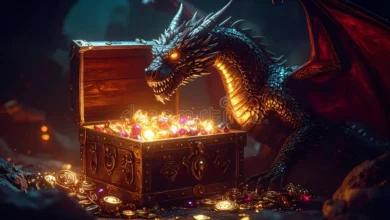
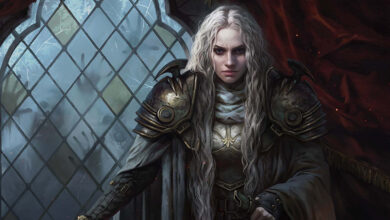
The annals of fantasy are soaked in it—the glittering, potent, and often dangerous essence of the mightiest creatures to ever soar the skies: Dragon Blood. In the realm of Fantasy RPG games, dragon blood is far more than a simple plot device. It is a source of power, a catalyst for transformation, and a currency of legend. From corrupting entire worlds to granting heroes god-like abilities, the presence of dragon blood often signifies a deeper, more epic narrative. This article explores the multifaceted role of dragon blood in fantasy RPGs, examining how this mystical substance shapes gameplay, character development, and world-building.
What is Dragon Blood? More Than Just Ichor
In the context of Fantasy RPGs, dragon blood is typically portrayed as a substance of immense magical potency. It is not merely the blood of a living creature; it is a concentrated source of primordial power. Depending on the game’s lore, it can be a blessing, a curse, or a tool for ultimate evolution.
- A Source of Corruption: In games like the upcoming Dragonkin: The Banished, dragon blood is the very source of the world’s woes. It has “corrupted” the land, spawning evil creatures from the depths of the earth. Here, the blood is an environmental hazard and a mutagen, creating the very monsters players must hunt .
- A Tool for Transformation: Perhaps the most iconic use of dragon blood is its ability to transform a being. In the Heroes of Might and Magic III campaign “Dragon’s Blood,” the ambitious Overlord Mutare seeks a fabled vial of Dragon’s Blood. Ingesting it doesn’t just grant her power; it transforms her into a powerful sentient dragon, fundamentally changing her capabilities and role in the world .
- An Inherited Trait: Dragon blood can also be a hereditary gift. In games like Code: Dragonblood, certain humans are born with “Dragon Blood” in their veins. These individuals possess greater strength and unique abilities, but they walk a fine line; if the dragon blood’s concentration exceeds 50%, they lose their will and become mindless servants of the Dragon Lords . Similarly, TTRPGs like the one on World Anvil feature a “Dragonblood” profession, where characters can feel draconic magic pulsing through their veins, granting them innate knowledge and resilience .
Key Games Featuring Dragon Blood
The “Dragon Blood” trope has been central to several notable RPGs. Here is a comparison of how different games have implemented this concept.
Gameplay Mechanics: How Dragon Blood Shapes Your Adventure
The influence of dragon blood extends deep into gameplay, often dictating character progression, combat style, and strategic choices.
1. Character Classes and Abilities
Dragon blood is often the defining trait for specific character classes. In Code: Dragonblood, the dragon blood determines your lineage and unlocks powerful “Kotodama” (spoken magic) abilities unique to your bloodline . The “Dragonblood” profession in tabletop RPGs provides specific feats as a character levels up, such as:
- Theme Knowledge (1st Level): Expertise in dragon lore.
- Dragon Mien (6th Level): The ability to mimic a dragon’s terrifying presence to intimidate foes .
- Dragon Skin (12th Level): Increased resistance to elemental damage .
2. Unique Upgrade Systems
Modern games are using dragon blood as a resource for deep, strategic progression. In Dragonkin: The Banished, the “Ancestral Network” is an innovative mechanic where players use dragon blood acquired from vanquished foes to acquire and place abilities. This creates a network of modifiers that allows for countless combinations, letting players define their unique fighting style, whether they are a Barbarian, Oracle, or Knight .
3. The Risk of Power
A compelling mechanic in dragon blood narratives is the element of risk versus reward. As highlighted in Code: Dragonblood, the more players tap into their draconic power, the closer they come to losing their humanity. This limit system forces players to manage their power usage strategically, adding a layer of tension to every battle .
Thematic Depth: Corruption, Power, and Humanity
Beyond mechanics, dragon blood serves as a powerful narrative theme.
- Corruption and the Environment: It can be a blight on the land, as seen in Dragonkin, where the world itself is devastated and must be cleansed .
- Ambition and Transformation: It represents the ultimate ambition, as with Mutare, who desires the power to rule not just as a lord, but as a dragon .
- The Burden of Heritage: For those born with it, like in Code: Dragonblood, it is both a gift and a curse. It sets them apart from humanity and tasks them with a lonely mission of protection, all while threatening to consume them from within .
The “Dragon-Blooded” are often portrayed as occupying a space between mortals and the divine, a theme explored in various rule systems where they are described as operating under “anime physics”—stronger, faster, and more resilient than mere humans, yet prone to emotional extremes and a precious few in number .
Frequently Asked Questions (FAQs)
Q: What does “Dragon Blood” typically do in RPGs?
A: It varies, but common uses include: transforming a character into a dragon or part-dragon, granting powerful magical abilities or elemental resistances, serving as a key resource for upgrading gear and skills, or acting as a corrupting force that drives the main plot .
Q: Are there different types of Dragon Blood based on dragon color?
A: Yes, frequently. In many systems, like the Dungeons & Dragons “Dragonblood” sorcerer subclass, the color of your draconic ancestry (e.g., Red for Fire, Blue for Lightning, White for Cold) determines the type of damage you resist and can amplify . This is also seen in the elemental aspects (Air, Earth, Fire, Water, Wood) in other RPG settings .
Q: Can players become dragons by using dragon blood?
A: Absolutely. This is a classic fantasy trope. The most direct example is the Heroes of Might and Magic III campaign, where the hero Mutare’s primary goal is to find and drink Dragon’s Blood to transform into a dragon .
Q: Is Dragon Blood always a positive force for the player?
A: No, it often comes with a significant cost. In Code: Dragonblood, using too much of your power can cause you to lose control and become a mindless “fallen warrior” . The power is a double-edged sword, offering immense strength but threatening the player’s very identity.
Q: What is the “Ancestral Network” in Dragonkin: The Banished?
A: It is a unique upgrade system where players place abilities and modifiers earned in battle onto a grid. This strategic placement allows for highly customizable character builds, visually representing the flow of dragon blood power within the hero .
Conclusion
Dragon blood remains one of the most versatile and captivating elements in Fantasy RPG games. Whether it is a tool for cosmic evolution, a corrupting pollutant, or the very essence of a hero’s soul, it consistently provides a rich source of conflict, power, and intrigue.