The Twilight of Divinity: DOTA Dragon’s Blood Book Three and the End of All Things
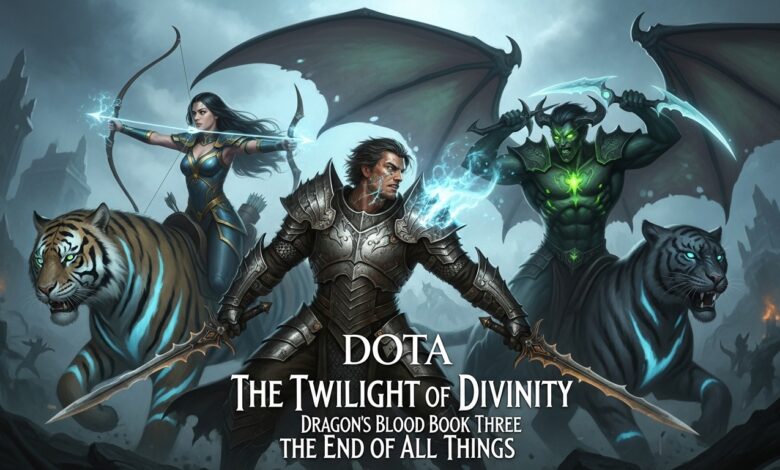
The arrival of DOTA Dragon’s Blood Book Three in August 2022 marked the definitive conclusion to an animated saga that had redefined expectations for video game adaptations across three ambitious seasons. This final chapter brought closure to the intertwining destinies of mortals gods and ancient dragons while delivering emotional punches that resonated far beyond the confines of its source material. The eight-episode finale demonstrated how far the series had evolved from its origins as promotional content for a competitive multiplayer game into a standalone epic capable of standing alongside the most respected works of animated fantasy. The culmination of narratives woven through twenty-four episodes proved that patient storytelling and genuine character investment could transform familiar tropes into something profoundly moving.
Book Three plunges immediately into apocalyptic circumstances with the Terrorblade’s cosmic machinations having brought reality itself to the brink of unraveling. The dimensional barriers separating the material world from the Foulfell and countless other planes have grown dangerously thin creating instabilities that manifest as physical distortions and temporal anomalies across the landscape. This catastrophic framing might have overwhelmed less confident storytelling but the writing maintains disciplined focus on how these universal threats impact specific characters we have grown to understand deeply. The end of everything becomes meaningful only through the individuals facing it and the series never loses sight of this truth even as the scale expands to multiverse-threatening proportions.
The central relationship between Davion and Mirana receives its ultimate test as circumstances force them apart even as their destinies grow increasingly intertwined. Their separation throughout much of the season creates aching longing that pays dividends in their eventual reunion where both have been fundamentally transformed by experiences the other cannot fully comprehend. Davion’s struggle with Slyrak’s consciousness has evolved from unwelcome intrusion to genuine partnership though this union demands ever-greater sacrifices of his human identity. Mirana’s journey toward divine inheritance forces her to confront whether love can survive apotheosis and whether a being of cosmic significance can maintain connection to individual mortal lives. Their final scenes together achieve genuine tragic beauty suggesting that love persists even when happiness proves impossible.
The Invoker’s meticulously constructed schemes reach their devastating culmination as the full scope of his manipulations becomes clear. Across three seasons this seemingly omniscient figure has moved pieces across the cosmic chessboard driven by grief for his daughter and determination to undo her death regardless of consequences for reality itself. Book Three forces him to confront the fundamental impossibility of his desires and the damage his pursuit has inflicted upon countless innocent lives. His confrontation with Selemene carries the weight of ancient love twisted into hatred by betrayal and loss while his interactions with Filomena force acknowledgment that his love has become indistinguishable from possessive destruction. The resolution of his arc offers neither redemption nor simple condemnation but rather tragic recognition of how intelligence and power without wisdom lead inevitably to catastrophe.
The Terrorblade emerges fully as antagonist whose threat extends beyond physical destruction into philosophical challenge to the very nature of existence. His desire to eliminate suffering by eliminating the imperfect reality that generates it represents a dark mirror of legitimate desires for peace and order. The season explores whether his vision stems from genuine compassion or from the same control-seeking instincts that drive human tyrants magnified to cosmic scale by his demonic nature. His confrontation with the protagonists requires not merely military victory but affirmative defense of imperfection messiness and free will as essential characteristics of meaningful existence. This philosophical dimension elevates the conflict beyond typical fantasy confrontation into genuine exploration of what makes life worth preserving.
The mythology of the Eldwurms achieves definitive exploration as these ancient embodiments of cosmic principles face extinction through the Terrorblade’s harvesting. The season reveals the true nature of their connection to reality’s fundamental structure and what their destruction would mean for continued existence across all planes. Individual Eldwurms demonstrate distinct personalities and agendas that complicate simple categorization as natural forces with Slyrak’s partnership with Davion representing merely the most visible example of their capacity for relationship with lesser beings. The fate of these primordial creatures becomes inseparable from the fate of the human protagonists suggesting that cosmic and personal scales are ultimately interconnected rather than separate domains.
Fymryn’s redemption arc reaches satisfying completion as the elf who began as antagonist and thief transforms into genuine hero through acceptance of responsibility for her actions. Her journey from stealing lotuses to attempting to save reality demonstrates the series’ commitment to character growth that feels earned through struggle rather than granted through narrative convenience. Her relationship with the forgotten goddess Mene and her opposition to Selemene’s usurped power provide theological depth that enriches the fantasy worldbuilding. The resolution of her story suggests that redemption remains possible even for those who have caused significant harm provided genuine commitment to repair and transformation.
Marci’s character receives powerful culmination as the mute warrior demonstrates that communication and heroism require no words. Her loyalty to Mirana and her devastating combat capabilities have made her fan favorite across the series and Book Three provides moments of genuine triumph and heartbreak for this character. The animation of her fight sequences achieves some of Studio Mir’s most impressive work conveying personality and emotion through movement and expression alone. Her ultimate fate provides one of the season’s most affecting moments demonstrating the series’ willingness to sacrifice beloved characters when narrative demands rather than protecting them through plot armor.
Luna’s confrontation with her devotion to Selemene forces reevaluation of faith and service that resonates with broader themes of institutional loyalty and personal growth. Her journey from unquestioning enforcer to questioning believer to independent actor mirrors the broader trajectory of characters learning to think for themselves rather than accepting received wisdom. Her final choices regarding her goddess demonstrate that love can manifest as opposition when the beloved has lost their way suggesting complex understanding of relationships that transcend simple obedience. This arc provides satisfying conclusion to a character who might have remained mere antagonist in less ambitious storytelling.
The visual achievements of Book Three represent Studio Mir’s most spectacular work across the trilogy with animation that genuinely rivals theatrical feature films. The cosmic sequences depicting multiple planes of existence and the beings that inhabit them demonstrate technical capabilities that push the boundaries of streaming television production. The final confrontations blend intimate character moments with universe-shaking action maintaining emotional coherence even as the scale becomes literally incomprehensible. The color palette evolves throughout the season with the distinctive visual schemes of earlier episodes giving way to increasingly abstract and threatening imagery as reality itself destabilizes. This visual evolution enhances the narrative without overwhelming it ensuring that spectacle always serves story rather than replacing it.
The thematic concerns of Book Three coalesce around questions of sacrifice meaning and what makes existence worthwhile in a universe of suffering and impermanence. The series asks whether individual lives matter against cosmic scales and answers affirmatively through characters who choose specific others over abstract principles or universal good. This humanistic perspective grounds the fantastic elements in recognizable emotional truth ensuring that viewers can relate to beings dealing with impossible circumstances. The exploration of parental love romantic devotion and friendship under extreme pressure provides universal entry points into the specific mythology of the DOTA universe.
The resolution of Book Three provides closure that feels complete rather than merely terminal with character arcs reaching destinations that honor their development while acknowledging ongoing life beyond the frame. The final episodes distribute attention across the ensemble ensuring that supporting characters receive resolution proportional to their importance rather than being forgotten in focus on protagonists. The fate of the world suggests transformation rather than restoration with the new reality emerging from catastrophe different from what existed before but still containing possibility for meaning and connection. This approach avoids the artificial neatness that weakens many fantasy conclusions accepting that genuine resolution includes loss and permanent change.
The reception of Book Three confirmed that DOTA Dragon’s Blood had achieved something rare in video game adaptations genuine artistic significance independent of source material popularity. Critics praised the ambitious scope and emotional depth with many noting that the series had earned its tragic weight through careful character development across three seasons. Fans appreciated the faithful representation of game lore elements while newcomers found the conclusion accessible despite unfamiliarity with DOTA mechanics. The season demonstrated that focused storytelling across limited episodes could achieve what bloated series often fail to deliver genuine emotional impact and thematic coherence.
The legacy of Book Three extends through its influence on subsequent animated productions and video game adaptations. Its success helped establish international collaboration between American writing and Korean animation as viable model for high-quality content creation. The demonstration that game adaptations could support sophisticated narrative without becoming inaccessible influenced industry approaches to similar properties. The specific achievement of maintaining and escalating quality across three seasons provided template for how serialized content could develop without losing creative energy or focus.
The voice performances of Book Three represent culmination of work across the entire series with actors delivering readings of remarkable nuance and power. Yuri Lowenthal captures Davion’s transformation from confident warrior to integrated being with both terror and wonder. Lara Pulver conveys Mirana’s apotheosis without losing the specific personality that defined her from introduction. Troy Baker’s Invoker achieves genuine tragic dimension making antagonist comprehensible even at his most destructive. The supporting cast maintains standards established throughout ensuring that every interaction carries accumulated weight of shared history.
The musical score by Dino Meneghin achieves fullest expression in Book Three with themes developed across seasons receiving variations reflecting character evolution and narrative resolution. The final episodes employ complete orchestral and electronic palette creating sonic landscape that enhances emotional impact without overwhelming visual storytelling. Integration of music with specific character motifs allows recognition and preparation as arcs approach conclusion demonstrating sophisticated approach to musical narrative rare in animated television.
Book Three of DOTA Dragon’s Blood stands as remarkable achievement in fantasy animation proving that video game source material can support genuinely moving and intellectually engaging narrative when approached with creative respect and adequate resources. The season resolves complex storylines while maintaining thematic coherence and emotional authenticity that distinguished the series from inception. Its conclusion offers model for how serialized content can achieve satisfying closure without sacrificing sense of ongoing life that makes fictional worlds feel genuine. As animated television continues evolving DOTA Dragon’s Blood remains significant contribution establishing possibilities that subsequent productions continue exploring and expanding.