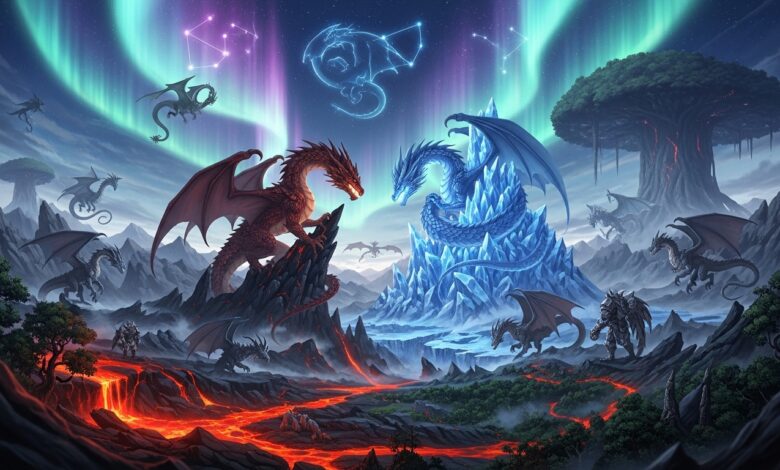
The animated epic Dragon’s Blood distinguishes itself within contemporary fantasy through its multifaceted portrayal of draconic beings that transcend simplistic categorization as monsters or allies. Across three seasons the series presents dragons as cosmic entities biological terrors and spiritual forces each manifestation serving distinct narrative and thematic purposes. This sophisticated treatment draws upon millennia of human dragon mythology while creating original contributions to how these creatures function within serialized storytelling. The various dragons encountered throughout the series demonstrate remarkable range from universe-threatening primordials to individual companions whose relationships with human characters drive emotional core of the narrative.
The visual language developed for dragons in Dragon’s Blood establishes immediate impact through distinctive aesthetic choices that separate different categories of draconic being. Color serves as primary identifier with different dragons displaying hues that suggest their nature and origins. The deep crimson and burning orange of fire-associated dragons contrast sharply with the void-black and star-speckled darkness of entities connected to absence and entropy. This chromatic coding allows viewers to immediately assess threat level and elemental affiliation while appreciating the artistic craft involved in creating visually striking creatures. The animation emphasizes scale and mass making these beings feel genuinely heavy and dangerous through careful attention to how they move through and interact with environments.
The sound design for dragons proves equally crucial to their effectiveness with vocalizations ranging from telepathic communication to physical roars that shake the landscape. The Eldwurms speak with voices that suggest vast age and non-human perspective their words carrying weight of eons and perceptions beyond mortal comprehension. Lesser dragons vocalize more conventionally though their sounds remain alien and threatening establishing them as genuinely other rather than merely large animals. The sonic landscape created around these creatures enhances their presence making scenes featuring dragons memorable through audio impact that complements visual spectacle.
The biology of dragons in Dragon’s Blood receives careful attention with the series establishing consistent rules for how these creatures function within its fantasy ecosystem. Respiration circulation and metabolism all follow patterns that suggest genuine physiological reality beneath mythological abstraction. Dragons require sustenance though their scale and nature make conventional feeding impractical suggesting they draw energy from sources beyond normal biological processes. The transformative nature of blood dragon physiology specifically enables fusion with human hosts creating hybrid entities that challenge categorization as either species. This biological grounding makes the fantastic elements more credible by establishing internal consistency that viewers can intuitively grasp.
The psychology of dragons emerges as one of the series’ most sophisticated achievements with different categories displaying consciousness that ranges from animal instinct to cosmic awareness. The Eldwurms demonstrate thought processes that transcend linear time perceiving past present and future as simultaneous aspects of single reality. This non-human cognition creates both narrative possibilities and communication challenges as these beings struggle to convey concepts that have no equivalent in mortal languages. Lesser dragons display more recognizable psychology with territoriality social hierarchy and individual personality though these traits remain filtered through alien sensory and cognitive structures. The series respects the otherness of dragons while finding points of connection that enable meaningful interaction.
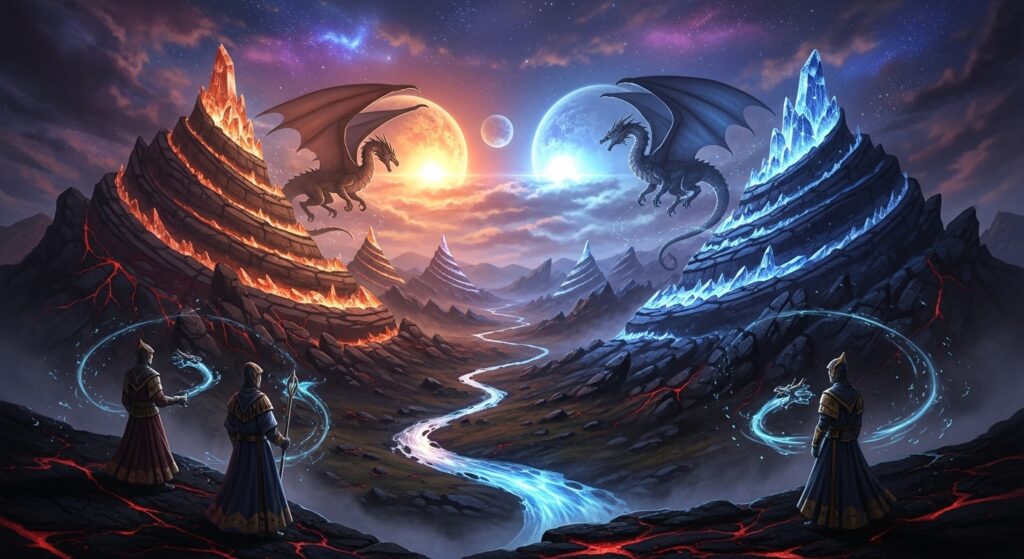
The relationship between dragons and magic in the Dragon’s Blood universe proves complex with these creatures functioning simultaneously as sources subjects and channels of supernatural power. Dragon blood specifically carries transformative properties that enable possession fusion and enhancement of magical capabilities in those who consume or contact it. This establishes dragons as walking reservoirs of power whose very existence generates magical effects on surrounding environments. The series explores how this power attracts exploitation with various factions seeking to harvest dragon materials for personal gain regardless of consequences for the creatures or cosmic balance. This dynamic creates moral complexity around dragon-human interaction that transcends simple conflict narratives.
The social structures among dragons receive intriguing though limited exploration suggesting hierarchies and relationships that operate across timescales challenging human comprehension. The Eldwurms maintain councils and alliances though their interactions span millennia making individual human lifespans seem insignificant by comparison. Younger dragons presumably establish territories and breeding patterns though the series focuses primarily on exceptional individuals rather than population dynamics. These glimpses of draconic society hint at rich cultures that exist parallel to human civilization largely unnoticed by shorter-lived species. The narrative choice to focus on individual dragons rather than social structures maintains mystery while enabling intimate character development.
The history of dragons in the world of Dragon’s Blood extends back to creation itself with Eldwurms present at or before the formation of material reality. This deep timeline establishes these creatures as witnesses to cosmic events that shaped the universe including conflicts between primordial forces and the emergence of divine beings. Dragons carry memories across eons their individual experiences constituting historical record predating written language or mortal civilization. This historical depth provides narrative resources for flashbacks ancient grudges and forgotten knowledge that drive contemporary plot developments. The weight of history borne by dragon characters adds gravitas to their present actions suggesting consequences that ripple across unimaginable durations.
The vulnerability of dragons despite their power proves essential to narrative tension with the series establishing multiple means by which these formidable creatures can be threatened harmed or destroyed. The Terrorblade’s harvesting scheme demonstrates that cosmic entities face dangers from dimensions outside normal reality while human ingenuity and magic can overcome individual dragons through sufficient preparation and determination. This vulnerability prevents dragons from functioning as simple plot devices that resolve conflicts through overwhelming power requiring instead that they negotiate ally or hide to achieve their goals. The balance between invincible threat and vulnerable being creates dynamic possibilities for storytelling that the series exploits effectively.
The thematic functions of dragons in Dragon’s Blood extend across multiple registers serving as metaphors for power nature and transformation while also functioning as literal elements of the fantasy world. The possession narrative involving Davion and Slyrak explores identity and change through concrete fantasy mechanism that makes abstract concepts tangible and visceral. The cosmic conflicts involving Eldwurms dramatize ecological and existential concerns about humanity’s relationship with forces beyond its control or comprehension. The exploitation of dragon materials critiques resource extraction and environmental destruction through fantasy lens that makes familiar patterns strange and visible. These layered meanings reward attentive viewing while ensuring that dragons function as more than mere spectacle.
The individual dragons who emerge as characters rather than background elements demonstrate remarkable range of personality and motivation. Slyrak evolves from terrifying invader to genuine if difficult partner through relationship with Davion showing capacity for growth that challenges assumptions about draconic nature. Other named dragons display loyalty cunning rage and wisdom proving that these creatures possess individual character as distinct as any human. The series avoids both the trap of making dragons simply monstrous and the alternative of making them too human finding balance that preserves their otherness while enabling genuine relationship. This achievement requires careful writing and voice performance that suggests vast consciousness filtered through limited communication.
The conclusion of Dragon’s Blood provides resolution for dragon storylines that honors their significance throughout the series while acknowledging their continuing existence beyond the narrative frame. The fates of individual dragons reflect their choices and relationships rather than serving merely as plot resolution devices. The cosmic status of dragonkind remains transformed by events suggesting that even immortal beings face change and evolution. These conclusions avoid both the sentimentality of simple happy endings and the nihilism of pointless destruction finding bittersweet resolutions that acknowledge cost of survival and transformation.
The influence of global dragon traditions upon the series proves evident though transformed through creative synthesis that produces original contributions to draconic mythology. Western medieval traditions contribute the association of dragons with treasure and destruction while Eastern concepts add the possibility of benevolent relationship and cosmic significance. Contemporary fantasy literature provides models for dragon psychology and society that the series adapts to its specific narrative needs. This eclectic approach creates dragons that feel simultaneously familiar and fresh drawing upon deep cultural resonance while avoiding mere replication of previous portrayals.
The technical achievement of bringing these dragons to screen deserves recognition with animation that conveys scale power and personality through movement and expression. The transformation sequences between human and draconic forms demonstrate particular craft with careful attention to anatomical detail and physical consequence. Combat involving dragons maintains coherence despite fantastic elements with tactics and strategies that suggest genuine consideration of how such battles might unfold. These technical elements support narrative investment by making dragons visually credible and emotionally compelling.