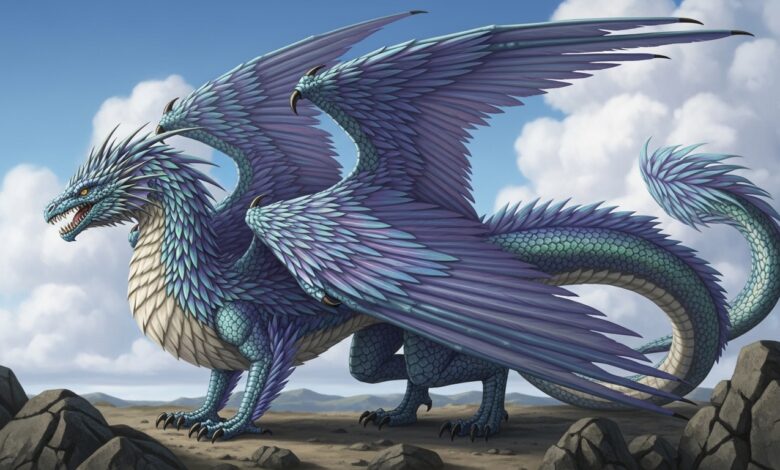
The animated series DOTA Dragon’s Blood distinguishes itself within the crowded landscape of fantasy entertainment through its sophisticated treatment of draconic beings elevating these creatures beyond mere monsters or mounts into complex cosmic entities with distinct natures hierarchies and mythological significance. The various dragon types presented across three seasons demonstrate remarkable worldbuilding coherence drawing upon global mythological traditions while creating original concepts that serve the specific narrative needs of the series. Understanding these classifications reveals the depth of thought invested in creating a coherent fantasy ecosystem where dragons function as more than antagonists or plot devices but as fundamental forces that shape reality itself.
The Eldwurms stand at the apex of draconic hierarchy in the DOTA Dragon’s Blood universe representing primordial embodiments of cosmic principles that existed before the formation of the material world. These ancient beings function less as biological organisms and more as living constants maintaining the fundamental forces that enable existence across all planes. Each Eldwurm corresponds to a specific aspect of creation with their individual natures reflecting the elemental or conceptual force they embody and preserve. The series introduces several distinct Eldwurms across its run including Slyrak of fire Byssrak of void and others representing time earth and additional fundamental principles. Their physical forms suggest massive power with scales that shimmer with inner light and eyes that contain depths suggesting perception across dimensions beyond mortal comprehension.
Slyrak the Ember Eldwurm receives the most extensive development through his fusion with the human protagonist Davion creating the central narrative engine of the entire series. As the embodiment of fire and destruction Slyrak initially appears as terrifying force of nature whose consciousness overwhelms the mortal vessel attempting to contain it. However across three seasons this relationship evolves from possession toward genuine partnership suggesting that even cosmic forces of destruction possess capacity for relationship and growth. Slyrak’s memories extending across eons provide Davion access to ancient knowledge while his draconic instincts enhance combat capabilities beyond human limitations. This specific Eldwurm demonstrates that these beings possess individual personalities distinct from their cosmic functions complicating simple categorization as mere forces of nature.
Byssrak the Void Eldwurm presents contrasting nature to Slyrak embodying absence nothingness and the spaces between existence rather than affirmative force. His appearance suggests alien geometry with forms that seem to absorb light and attention suggesting the void he represents. The interaction between Byssrak and other Eldwurms reveals tensions within the cosmic hierarchy as the void Eldwurm’s nature inherently conflicts with beings of affirmative existence. His role in the series’ apocalyptic events demonstrates how the Eldwurms despite their power remain vulnerable to threats from outside normal reality including the Terrorblade’s harvesting schemes. This vulnerability establishes stakes for cosmic conflicts that might otherwise seem abstract by showing that even fundamental forces face genuine danger.
The concept of Eldwurm souls proves crucial to the series’ mythology with these essences representing concentrated cosmic power that can be stolen manipulated or transferred under specific circumstances. The Terrorblade’s quest to harvest these souls drives much of the apocalyptic conflict as possession of multiple Eldwurm essences would grant power to reshape reality according to the bearer’s desires. This mechanic establishes why these ancient beings fear mortality despite their apparent immortality and why they form alliances with lesser beings when threatened. The soul concept also explains the fusion phenomenon that creates Dragon Knights suggesting that Eldwurm consciousness can partition and share existence with compatible mortal vessels creating hybrid entities of unprecedented capability.
Below the Eldwurms in the cosmic hierarchy exist various lesser dragons and draconic creatures that populate the material plane and serve different functions within the fantasy ecosystem. These beings possess biological reality rather than cosmic embodiment functioning as predators mounts and powers within the political and military landscape of the series’ world. The distinctions between these lesser dragons and the Eldwurms prove crucial for understanding the series’ cosmology as it establishes multiple categories of draconic existence with different origins natures and capabilities. This tiered structure allows for dragon-related narratives at various scales from cosmic conflicts threatening all reality to more grounded concerns about territorial boundaries and military applications.
The dragon mounts used by various factions demonstrate practical applications of draconic power within mortal political structures. These creatures appear to be domesticated or tamed varieties bred or captured for military purposes allowing aerial combat and rapid transportation across the fantasy landscape. Their treatment varies by culture with some factions regarding them as mere tools while others demonstrate genuine respect for their power and intelligence. The series presents these mounts as distinct from the Eldwurms in both scale and nature suggesting evolutionary or created origins rather than cosmic embodiment. Their presence establishes that dragons exist as biological reality within the world rather than merely as mythological or cosmic abstractions.
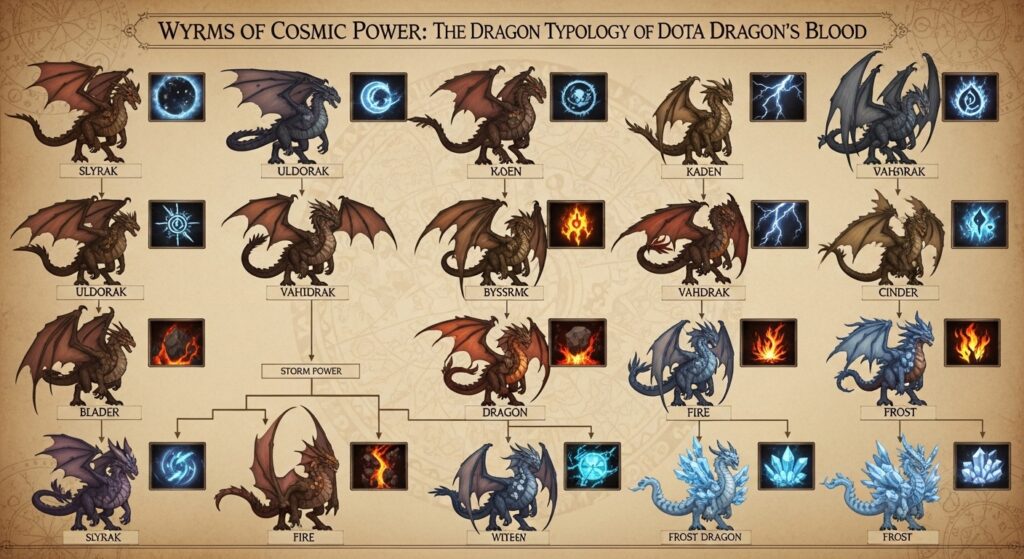
The blood dragons referenced in the series title and central mythology represent a specific category of draconic being distinct from both Eldwurms and common mounts. These creatures possess blood that carries transformative properties allowing fusion with human hosts and the transfer of draconic capabilities across species boundaries. The exact nature of blood dragons remains partially mysterious with the series suggesting they represent intermediate category between cosmic Eldwurms and mundane creatures. Their blood serves as medium for the possession phenomenon that creates Dragon Knights indicating unique biological or magical properties that enable consciousness transfer and physical transformation. This category proves crucial for the series’ narrative mechanics while maintaining sufficient mystery to preserve wonder.
The transformation sequences depicting Davion’s shifts between human and draconic forms demonstrate the physical nature of blood dragon fusion with detailed animation showing the painful and violent process of metamorphosis. These sequences suggest that the transformation involves genuine physiological change rather than mere illusion or magical overlay with bones reconfiguring flesh expanding and consciousness fragmenting and reforming. The visual presentation draws upon body horror traditions while maintaining fantasy spectacle creating sequences that convey both the power and the cost of draconic fusion. This physical grounding makes the cosmic elements more credible by establishing biological reality beneath mythological abstraction.
The various dragon types demonstrate different relationships with human civilization reflecting their natures and capabilities. The Eldwurms generally avoid direct interaction with mortal affairs except when cosmic necessity demands engagement maintaining distance that reinforces their status as forces beyond human comprehension or influence. Lesser dragons and mounts exist within human political and economic systems as resources to be exploited or threats to be managed. The blood dragons occupy intermediate position with their transformative potential making them objects of desire and fear for those who understand their capabilities. These different relationships create narrative possibilities ranging from cosmic conflict to political intrigue to personal transformation.
The series explores how different cultures understand and categorize these various draconic types with the Dragon Knights representing one specific tradition of interaction. This order has developed techniques and knowledge for managing blood dragon fusion including methods for maintaining human identity against draconic consciousness and combat applications of transformed capabilities. Their understanding proves incomplete and dangerous as Davion’s experiences demonstrate that the fusion process involves elements beyond their documented knowledge. This gap between cultural understanding and cosmic reality generates much of the series’ tension as characters discover that their categories and assumptions fail to capture the full nature of draconic existence.
The visual design of different dragon types establishes clear distinctions while maintaining coherent aesthetic that suggests shared ancestry or creation. Eldwurms appear largest and most alien with features that suggest their cosmic nature through scale and strange proportions. Lesser dragons appear more conventionally reptilian with variations indicating different breeds or species adapted to various environments and purposes. The blood dragons and transformed Dragon Knights occupy middle ground with humanoid forms that retain draconic features suggesting the hybrid nature of their existence. This visual language allows viewers to immediately categorize encounters while appreciating the spectrum of draconic possibility.
The behavioral differences between dragon types prove as significant as their physical distinctions with Eldwurms demonstrating consciousness and communication capabilities that challenge human comprehension. Slyrak’s thoughts when accessible to Davion reveal perception across time and dimension with priorities and concerns that seem alien from mortal perspective. Lesser dragons appear more instinctively driven with behavior patterns recognizable as animal territoriality and predation. These behavioral distinctions support the cosmological hierarchy suggesting that consciousness scales with cosmic significance in ways that complicate simple predator-prey relationships.
The series’ treatment of dragon reproduction and lifecycle remains largely mysterious with implications that these beings may not propagate through biological means familiar to mortals. The Eldwurms appear essentially immortal with existence stretching across eons without clear indication of how new such beings might emerge. Lesser dragons presumably reproduce through means appropriate to their biological nature though the series focuses on their utility to human civilization rather than their natural history. This selective focus maintains mystery around draconic origins preserving their status as beings that transcend normal biological categories.
The ultimate fate of various dragon types across the series’ conclusion provides commentary on the relationship between cosmic and mortal scales of existence. The apocalyptic events threaten Eldwurms and lesser dragons alike demonstrating that no category of being remains entirely secure against existential threat. The resolutions involving Slyrak and other named dragons suggest possibilities for transformation and continuation that transcend simple survival or destruction. These conclusions honor the complexity established throughout the series refusing easy answers about the nature of these magnificent creatures.
The dragon typology of DOTA Dragon’s Blood ultimately serves narrative and thematic purposes beyond mere worldbuilding decoration. The distinctions between Eldwurms blood dragons and lesser varieties enable stories at different scales from intimate personal transformation to cosmic apocalypse. The relationships between these types suggest ecological and cosmological systems where different beings occupy different niches with different capabilities and limitations. This coherent structure supports suspension of disbelief while providing rich material for exploration across the series’ run and potentially beyond.
The influence of global dragon mythology upon these categories proves evident upon examination though the series creates original synthesis rather than direct adaptation. The Eldwurms recall Chinese conceptions of dragons as cosmic forces associated with elemental powers while their physical forms suggest Western medieval traditions. The blood dragons and their transformative properties echo various mythological traditions where dragon substances grant power or immortality to human recipients. This synthetic approach creates familiar entry points for viewers from different cultural backgrounds while avoiding direct replication that might feel derivative.
The technical achievement of animating these various dragon types deserves recognition with Studio Mir creating distinct visual identities for each category while maintaining coherent style. The Eldwurms receive most spectacular treatment with sequences depicting their full scale and power achieving genuine awe through animation quality. The transformation sequences between human and draconic forms demonstrate remarkable attention to anatomical detail and physical consequence. These visual achievements make the typology tangible and credible supporting the narrative investment in draconic worldbuilding.