Captain Laserhawk: A Blood Dragon Remix – The Ultimate Ubisoft Mashup Experience and an Exciting Neon-Drenched Dystopian Thriller 2026
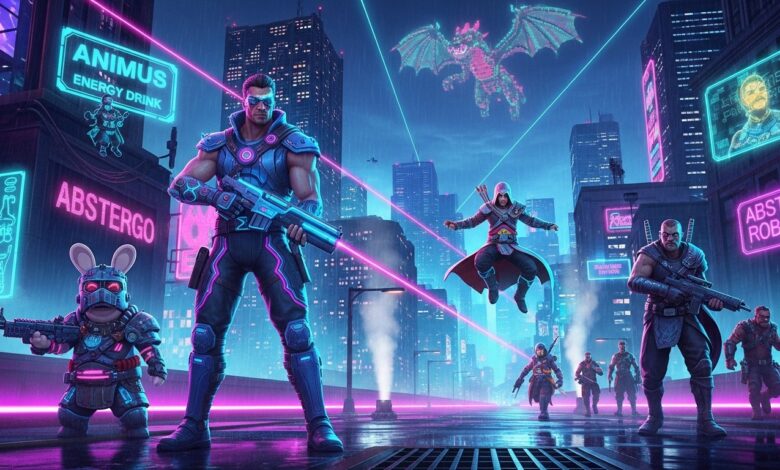
Table of Contents
Introduction
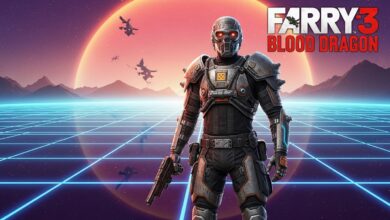
Captain Laserhawk: A Blood Dragon Remix is one of the most unique animated projects connected to Ubisoft’s expanding multimedia universe. It combines cyberpunk aesthetics, dystopian storytelling, and characters inspired by multiple Ubisoft franchises into a single chaotic, neon-drenched world. The series is heavily influenced by the style and tone of Far Cry 3: Blood Dragon, which itself became a cult classic for its retro-futuristic design and exaggerated 1980s action movie energy.
This “remix” approach transforms familiar gaming icons into darker, more experimental versions of themselves while placing them in a highly controlled authoritarian society. The result is a series that feels both familiar and completely unpredictable.
This article explores the story, themes, characters, world design, and significance of Captain Laserhawk: A Blood Dragon Remix, explaining why it stands out as one of Ubisoft’s most creative narrative experiments.
What Is Captain Laserhawk: A Blood Dragon Remix?
Captain Laserhawk: A Blood Dragon Remix is an animated cyberpunk series created by Ubisoft in collaboration with Netflix. It is set in an alternate dystopian version of America called Eden, a hyper-controlled technocratic state ruled by surveillance, propaganda, and artificial intelligence systems.
The series features:
- Cyber-enhanced soldiers
- Brainwashed media-controlled citizens
- Digital surveillance networks
- Violent underground resistance movements
Captain Laserhawk: A Blood Dragon Remix is an animated cyberpunk series created by Ubisoft and Netflix that blends dystopian storytelling, neon-fueled visuals, and reimagined characters from multiple Ubisoft franchises. Set in a controlled futuristic society called Eden, it follows a genetically enhanced soldier navigating rebellion, identity conflict, and oppressive surveillance systems in a chaotic digital world.
The Setting: The Dystopian World of Eden
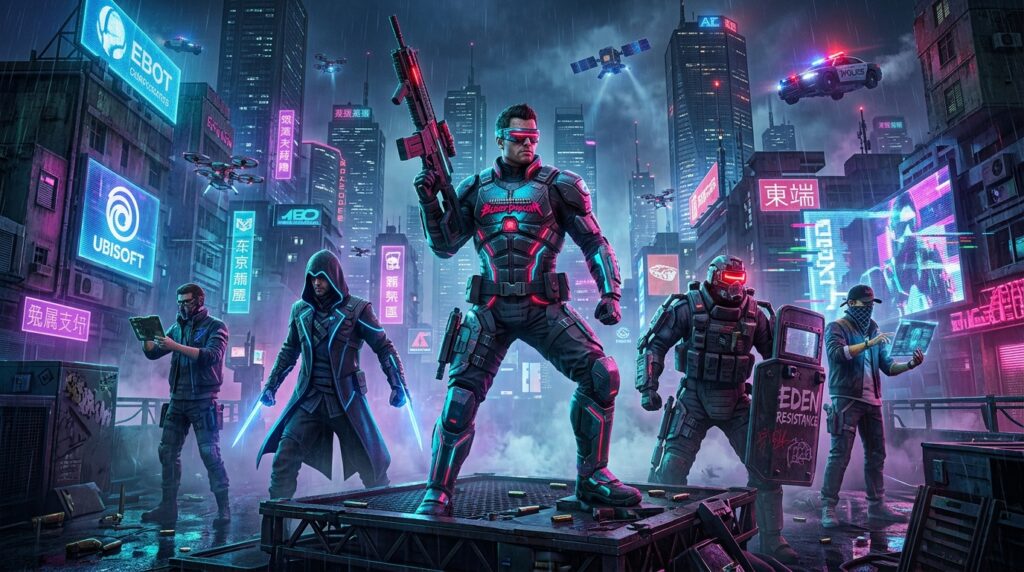
The world of Eden is a central element of the series. It represents a futuristic authoritarian society where freedom has been replaced by control.
Key features of Eden include:
- Constant surveillance of citizens
- Media manipulation and propaganda systems
- Corporate-controlled government structure
- High-tech security forces
- Artificial intelligence monitoring human behavior
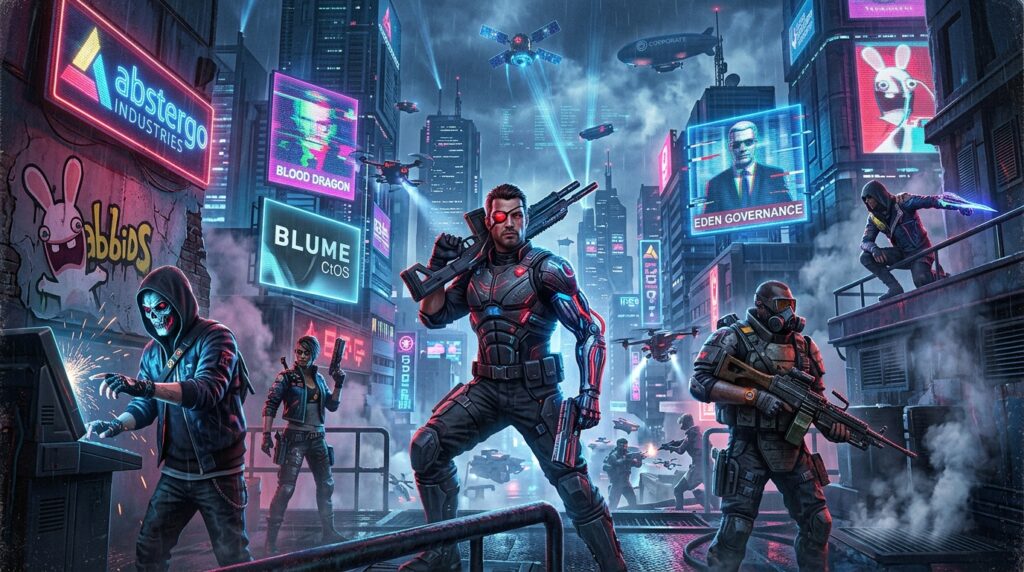
Eden is visually designed with neon lights, cyberpunk architecture, and digital overlays that create a sense of constant artificial presence.
This world reflects modern fears about surveillance, data control, and loss of privacy, exaggerated into a dystopian future.
Main Character: Dolph Laserhawk
The protagonist, Dolph Laserhawk, is a genetically enhanced supersoldier. He is modeled as a rebellious figure trapped between loyalty and betrayal.
His character represents:
- Military experimentation and control
- Loss of personal identity
- Resistance against oppressive systems
- Moral conflict between obedience and freedom
Laserhawk is not a traditional hero. Instead, he is morally complex, shaped by violence, manipulation, and systemic control.
The Blood Dragon Connection
The “Blood Dragon” aspect of the title connects the series to Far Cry 3: Blood Dragon. This influence is visible in:
- Neon cyberpunk visuals
- Over-the-top action sequences
- Retro-futuristic design elements
- Satirical tone and dark humor
However, in this remix, the tone is darker and more politically layered. While Blood Dragon was heavily satirical and humorous, Captain Laserhawk adds emotional depth and dystopian seriousness.
Ubisoft Crossover Universe
One of the most unique aspects of the series is its crossover nature. Characters and references from multiple Ubisoft franchises appear in reimagined forms.
This includes inspirations from:
- Assassin-style stealth characters
- Military shooters
- Open-world action franchises
- Futuristic and historical Ubisoft universes
Instead of being direct adaptations, these characters are reinterpreted to fit the dystopian setting of Eden.
This creates a shared but distorted Ubisoft multiverse.
Themes of Control and Identity
At its core, Captain Laserhawk: A Blood Dragon Remix explores deep themes related to control, identity, and free will.
Major themes include:
- Government surveillance and loss of privacy
- Identity manipulation through technology
- Resistance against authoritarian systems
- The role of media in shaping reality
- Psychological impact of control systems
Characters often struggle with understanding whether their actions are truly their own or programmed by external forces.
Visual Style and Cyberpunk Design
The series is heavily influenced by cyberpunk aesthetics. It uses:
- Neon lighting and saturated colors
- Futuristic cityscapes
- Digital glitch effects
- High-tech military designs
- Brutalist architecture combined with holograms
This visual style reinforces the feeling of a controlled but chaotic world where technology dominates every aspect of life.
The animation style is dynamic, cinematic, and often experimental, reflecting the remix nature of the project.
Action and Narrative Style
The storytelling in Captain Laserhawk is non-linear and often unpredictable. It mixes:
- Fast-paced action sequences
- Psychological storytelling
- Political satire
- Dark humor and irony
The narrative does not follow a traditional hero journey. Instead, it focuses on fragmented perspectives, moral ambiguity, and shifting alliances.
This makes the series feel more like a cyberpunk experiment than a conventional animated show.
Relationship to Far Cry 3: Blood Dragon
While not a direct sequel, the series shares DNA with Far Cry 3: Blood Dragon in several ways:
- Neon cyberpunk aesthetic
- Satirical tone toward military systems
- Over-the-top futuristic violence
- Retro sci-fi influences
However, Captain Laserhawk evolves the concept into a more complex narrative format. It expands beyond parody into political commentary and emotional storytelling.
Why the Series Stands Out
Several factors make this series unique:
- It merges multiple game universes into one story
- It experiments with animation style and narrative structure
- It blends satire with serious dystopian themes
- It reimagines familiar characters in darker roles
- It expands Ubisoft’s storytelling beyond games
This makes it one of the most experimental adaptations in modern gaming-related media.
In a streaming landscape dominated by live-action adaptations and safe reboots, Captain Laserhawk: A Blood Dragon Remix stands out as one of the boldest, bloodiest, and most stylish video game-inspired animated series ever created. Released on Netflix on October 19, 2023, this six-episode adult animated sci-fi action show is not a direct adaptation of any single Ubisoft title. Instead, it is a wild, self-aware remix that takes the over-the-top cyberpunk energy of Far Cry 3: Blood Dragon and fuses it with reimagined characters and lore from across Ubisoft’s vast catalog — including Assassin’s Creed, Watch Dogs, Rayman, Beyond Good & Evil, Rainbow Six, and more.
Created by Adi Shankar (the visionary behind Netflix’s acclaimed Castlevania series) and produced by Ubisoft Film & Television with French animation studio Bobbypills, the series delivers a high-octane homage to early 1990s action, anime, and retro-futuristic aesthetics. At roughly 20–25 minutes per episode, the entire season clocks in at about two and a half hours — short, punchy, and incredibly rewatchable. It blends brutal violence, heartfelt emotion, sharp satire, and relentless 80s/90s nostalgia into a package that feels both fresh and lovingly familiar.
Setting: Welcome to Eden, 1992
The story unfolds in an alternate-history 1992 where the United States has been replaced by Eden, a gleaming yet oppressive technocracy ruled by the megacorporation of the same name. Propaganda floods the airwaves, megacorps control every aspect of life, and society is sharply divided between humans and Hybrids — artificially created anthropomorphic animals treated as second-class citizens, slaves, or even livestock.
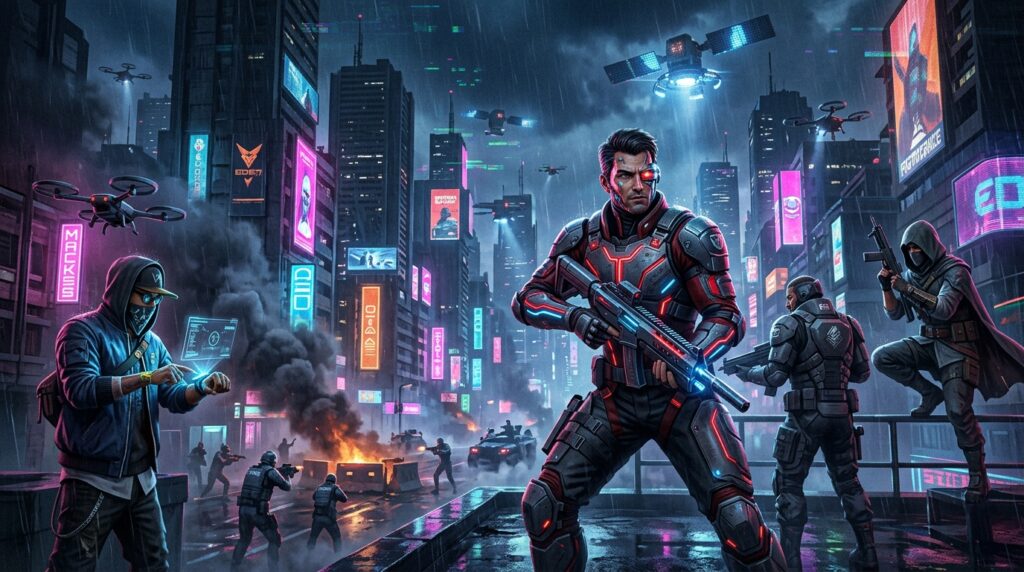
This dystopia is drenched in vibrant neon pinks, blues, and purples, with holographic billboards, retro CRT monitors, VHS glitch effects, and pixel-art transitions that scream “1990s cyberpunk fever dream.” The visual style perfectly captures the spirit of Far Cry 3: Blood Dragon while expanding it into a full cinematic universe. Synth-heavy music by electronic producer Oscillian pulses through every scene, enhancing the retro-futuristic vibe.
Eden is a world of corruption, surveillance, and corporate control. Beneath the shiny surface lies a resistance movement called DedSec (a clear nod to Watch Dogs), while the government deploys elite supersoldiers to maintain order. It’s a place where freedom is an illusion, betrayal is currency, and one wrong move can get you a bomb implanted in your head.
Plot and Characters: A Cybernetic Anti-Hero’s Journey
At the center is Dolph Laserhawk (voiced by Nathaniel Curtis), a cybernetically enhanced supersoldier formerly in service to Eden Tech Military. Laserhawk is a tragic, conflicted protagonist — part machine, part broken man — who dreams of escaping the system with his boyfriend, Alex Taylor (Boris Hiestand). After a daring escape, the couple plans one final heist to secure their freedom. But betrayal strikes hard: Alex turns on Dolph, leaving him captured and imprisoned in Supermaxx, Eden’s most secure black-site prison.
There, the warden implants an explosive device in Laserhawk’s head and forces him to lead a ragtag team of rebel outcasts known as the Ghosts. Their mission: undertake suicidal undercover operations to dismantle threats to Eden — particularly the growing DedSec resistance. What begins as coerced black-ops work slowly evolves into a deeper personal quest for redemption, identity, and a cause worth fighting for.
The supporting cast is stacked with wildly reimagined Ubisoft icons:
- Rayman appears in a darker, more grounded form — no longer the limbless platforming hero, but a cynical, grounded character navigating the harsh realities of Eden.
- Marcus Holloway from Watch Dogs 2 gets a remix as part of the hacker resistance.
- Characters inspired by Beyond Good & Evil (Jade and Pey’j), Assassin’s Creed, and even Rainbow Six operatives show up in surprising roles.
- Other cameos and references include figures echoing Pagan Min (Far Cry 4) and stealth legends like a reimagined Sam Fisher.
These aren’t simple crossovers — they are “remixed” versions that fit organically into the new lore, often subverting fan expectations while honoring the source material. The show explores themes of loyalty, betrayal, corporate exploitation, found family, and queer representation (Laserhawk’s relationship with Alex is central and handled with genuine emotion).
The narrative moves at a breakneck pace. Each episode delivers explosive action set pieces, prison-break tension, and emotional gut punches. Shankar’s signature style — seen in Castlevania — shines through: graphic violence, moral ambiguity, and surprisingly tender moments amid the chaos. The series never feels like fan service; it uses Ubisoft’s IP as building blocks for an original, heartfelt story.
Animation and Style: Retro Meets Brutal
Bobbypills’ animation is a standout. It mixes fluid 2D/3D hybrid techniques with deliberate retro flourishes — scan lines, pixelated flashbacks, and 8-bit combat sequences that pop during intense fights. Blood sprays in bright, almost cartoonish crimson (true to Blood Dragon’s neon aesthetic), while fight choreography is dynamic and satisfying.
The tone swings wildly but effectively: one moment you’re laughing at absurd 90s-style one-liners or over-the-top action; the next, you’re hit with raw emotional depth or biting social commentary on surveillance states and corporate greed. It’s TV-MA for a reason — expect strong language, nudity, graphic violence, and mature themes.
Gameplay Vibes Without Being a Game
Although it’s not an interactive video game, Captain Laserhawk captures the feel of playing Far Cry 3: Blood Dragon and other Ubisoft titles. Stealth sections, explosive shootouts, hacker mini-moments, and giant boss-like confrontations all translate beautifully to animation. Fans of the original Blood Dragon will smile at the laser eyes, cybernetic upgrades, and macho energy, now deepened with stronger character arcs.
The series even inspired a companion experience called Eden Online, a web-based promotional game that lets fans engage with the world.
Reception and Legacy
Critics and audiences largely embraced the show. IGN praised its brutal-yet-heartfelt tone and how Shankar “brings Ubisoft properties to life with passion and zeal.” Many called it one of the most unique animated series on Netflix, standing apart from safer adaptations. Fans appreciated the deep cuts for gamers alongside accessibility for newcomers. Some criticism focused on its short length and occasional erratic pacing, but the consensus is overwhelmingly positive: it’s fun, stylish, and surprisingly emotional.
As of 2026, the series has not yet received a second season, though its cult following and Ubisoft’s continued interest in multimedia (including other animated projects) keep hope alive. A manga expansion, Captain Laserhawk: A Blood Dragon Remix – Crushing Love, has added more lore and new characters for dedicated fans.
Why Captain Laserhawk Matters in 2026
In an era when video game adaptations often struggle to balance fidelity and creativity, Captain Laserhawk succeeds by embracing chaos. It doesn’t try to recreate gameplay one-to-one; instead, it remixes the spirit — the neon, the attitude, the absurdity, and the underlying anti-authoritarian themes — into something new.
It proves that Ubisoft’s worlds can coexist in surprising ways and that adult animation can handle complex relationships, political satire, and explosive action without losing heart. For longtime gamers, it’s a love letter filled with Easter eggs. For everyone else, it’s a thrilling, visually stunning ride through a dystopia that feels eerily relevant.
Whether you’re a Far Cry veteran, a Watch Dogs hacker, or simply someone who loves stylish anime with 90s flair, Captain Laserhawk: A Blood Dragon Remix delivers pure entertainment. Fire up Netflix, dim the lights, crank the synth soundtrack, and let Dolph Laserhawk show you that in Eden, freedom isn’t given — it’s taken, one laser blast at a time.
Frequently Asked Questions (FAQs)
1. What is Captain Laserhawk: A Blood Dragon Remix?
It is an animated cyberpunk series inspired by Ubisoft games and Blood Dragon style.
2. Is it connected to Far Cry 3: Blood Dragon?
Yes, it shares visual and thematic inspiration but is not a direct sequel.
3. What genre is the series?
It is a cyberpunk dystopian action animated series.
4. Who is the main character?
Dolph Laserhawk is the main protagonist.
5. What is the world of Eden?
It is a futuristic authoritarian society controlled by surveillance and AI.
6. Is it part of Ubisoft game universe?
It includes crossover elements from multiple Ubisoft franchises.
7. What are the main themes?
Control, identity, surveillance, and resistance.
8. Is the series serious or comedic?
It mixes dark satire with serious dystopian storytelling.
9. Where can it be watched?
It is available on Netflix.
10. Why is it unique?
Because it combines multiple game worlds into a single cyberpunk narrative.
Conclusion
Captain Laserhawk: A Blood Dragon Remix is more than just an animated series. It is a bold creative experiment that combines cyberpunk aesthetics, dystopian storytelling, and Ubisoft’s gaming legacy into a single chaotic universe.
By blending neon-drenched visuals with themes of control, identity, and resistance, it creates a world that feels both entertaining and thought-provoking. While it draws inspiration from Far Cry 3: Blood Dragon, it expands far beyond parody into a deeper exploration of technology and society.
In the end, it stands as a unique example of how video game universes can evolve into complex narrative ecosystems beyond traditional gameplay.