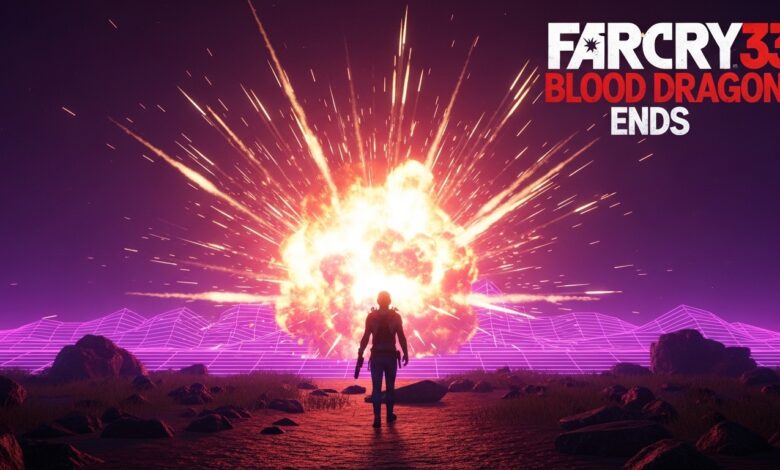
Introduction to Blood Dragon’s Neon World
Far Cry 3: Blood Dragon is a standalone expansion that transforms traditional first-person shooter gameplay into a stylized retro-futuristic experience. Set in a dystopian cyber world inspired by 1980s action movies, it blends satire, science fiction, and explosive combat into one compact adventure. The game intentionally breaks realism, instead focusing on exaggerated storytelling, neon visuals, and over-the-top action sequences. This unique design has helped it remain a cult classic among fans of the Far Cry franchise.
Story of Sergeant Rex “Power” Colt
The game follows Sergeant Rex “Power” Colt, a cybernetic commando sent on a mission to stop a rogue colonel threatening global destruction. The story is deliberately humorous and filled with clichés from vintage action films. Instead of serious narrative depth, it embraces absurdity, making the player feel like they are inside a 1980s sci-fi VHS movie. The dialogue, characters, and missions all contribute to a parody-like tone that sets it apart from typical shooters.
Gameplay and Combat Mechanics
Gameplay in Blood Dragon is fast, fluid, and action-focused. Players explore an open-world environment filled with enemy bases, mutant creatures, and hidden collectibles. The combat system encourages aggressive play, allowing users to use futuristic weapons such as plasma rifles, explosive arrows, and cybernetic abilities. Stealth is optional, but the game heavily rewards bold and chaotic engagement. Unlike traditional Far Cry titles, the mechanics are simplified to maintain a constant pace of action.
Neon Visual Style and 1980s Inspiration
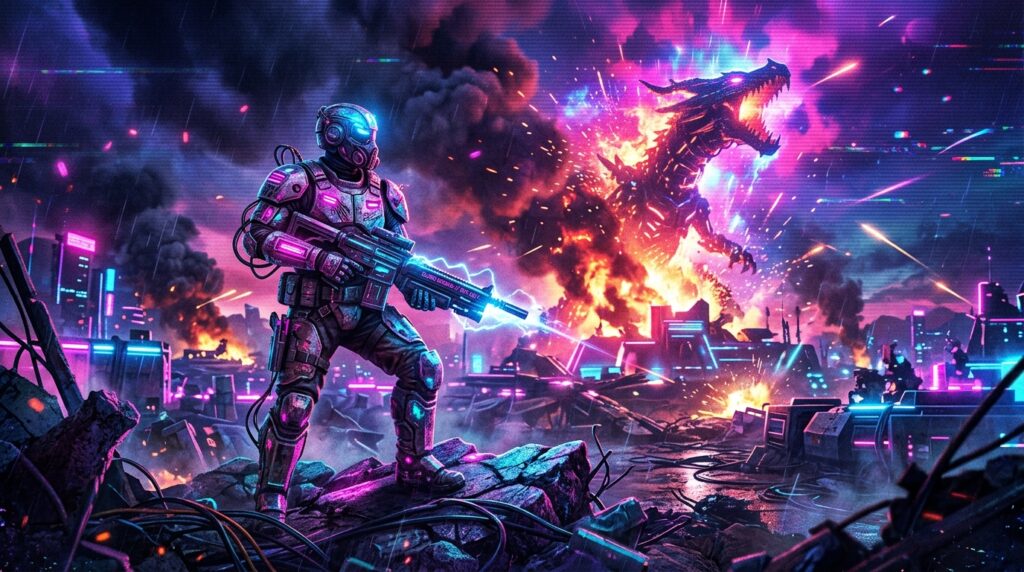
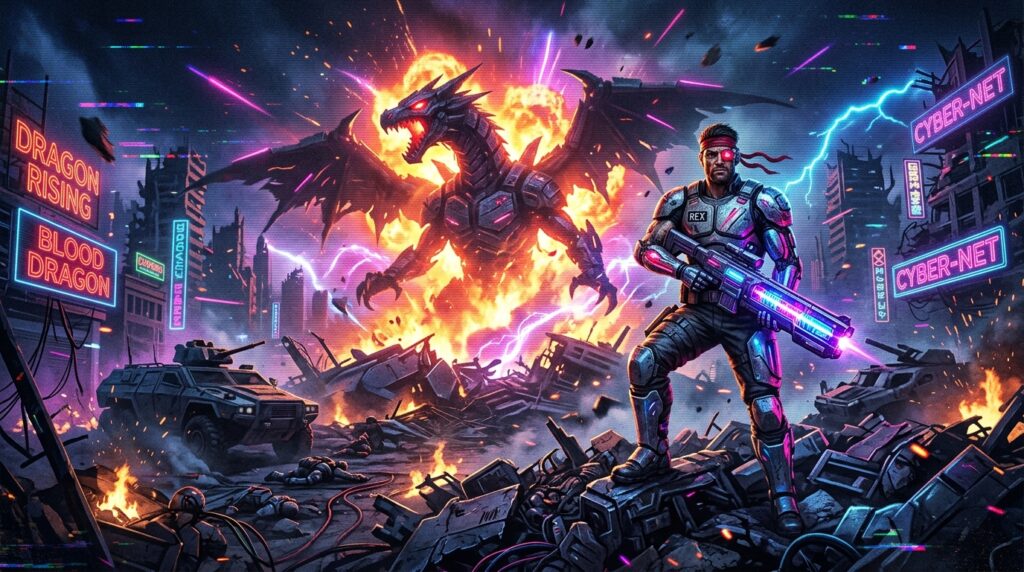
One of the most defining features of Blood Dragon is its visual presentation. The entire world is designed with glowing neon colors, VHS-style distortion effects, and synthwave aesthetics. The environment feels like a digital dream inspired by retro sci-fi films. The soundtrack uses electronic synth music to enhance immersion and reinforce the nostalgic atmosphere. This combination creates a unique artistic identity that continues to attract players years after release
Legacy and Modern Popularity
Despite being a spin-off, Far Cry 3: Blood Dragon has maintained strong popularity due to its originality and bold design choices. It stands as a creative experiment that successfully breaks away from conventional gaming formulas. Modern players continue to discover or revisit it because of its short length, accessibility, and entertaining gameplay loop. Its inclusion in modern platforms like subscription services helps introduce it to a new generation of gamers, keeping its legacy alive in the evolving gaming landscape.
A Love Letter to the 80s Goes Out With a Bang That Redefines DLC Excellence
When Ubisoft Montreal unleashed Far Cry 3: The Blood Dragon in 2013, nobody expected a standalone expansion to become one of the most celebrated cult classics in gaming history. What began as an audacious experiment—a neon-drenched parody of 1980s action cinema wrapped around the bones of Far Cry 3—culminated in an endgame experience that remains unmatched in its creative audacity. As players reach the final acts of this cybernetic fever dream, they discover that The Blood Dragon doesn’t just pay homage to the era of VHS tapes and synth soundtracks; it perfects the art of the explosive finale.
Table of Contents
The Journey to Oblivion
By the time players approach The Blood Dragon’s conclusion, they’ve transformed Sergeant Rex “Power” Colt from a standard cyber-commando into an unstoppable force of nature. The progression system, streamlined from its parent game, ensures that every upgrade feels meaningful. Double jump capabilities, enhanced health regeneration, and devastating weapon modifications turn Rex into the ultimate 80s action hero stereotype—complete with cheesy one-liners that would make Arnold Schwarzenegger proud.
The endgame doesn’t simply throw harder enemies at players; it fundamentally changes the battlefield. The once-terrifying The Blood dragons—massive neon-beasts that roam the island—become tools of destruction rather than threats to avoid. Players unlock the ability to throw cyber-hearts to lure these creatures into enemy bases, turning the apex predators into unwitting allies. This mechanic, introduced gradually throughout the campaign, reaches its full potential in the final missions, where strategic dragon deployment becomes essential for survival.
Neon-Soaked Introduction
Far Cry 3: Blood Dragon is a bold and unconventional expansion that transforms the traditional first-person shooter formula into a vibrant synthwave experience. Unlike realistic military shooters, this game embraces an exaggerated retro-futuristic style inspired by 1980s action movies and sci-fi culture. Its neon-drenched world, cybernetic themes, and satirical tone make it one of the most unique entries in the Far Cry universe. The game is not just about combat; it is about style, attitude, and pure arcade energy.
A Cybernetic Hero in a Broken World
The story follows Sergeant Rex “Power” Colt, a cyber-enhanced soldier sent on a mission to stop a rogue colonel threatening global destruction. The narrative is intentionally over-the-top, filled with clichés, humor, and explosive action sequences. Instead of focusing on realism, the game leans into parody, recreating the feel of classic VHS-era sci-fi films. This approach gives the storyline a nostalgic charm while keeping players engaged through constant action and absurd storytelling.
Gameplay Built for Chaos and Action
The gameplay in Blood Dragon is designed for fast-paced and aggressive combat. Players explore an open-world environment filled with enemy bases, mutant creatures, and hidden upgrades. The game encourages experimentation with futuristic weapons such as laser rifles, explosive bows, and cybernetic abilities. Unlike traditional stealth-heavy shooters, Blood Dragon rewards direct confrontation and creative destruction. The simplified mechanics ensure that the action remains constant and engaging throughout the experience.
A Visual Style Like No Other
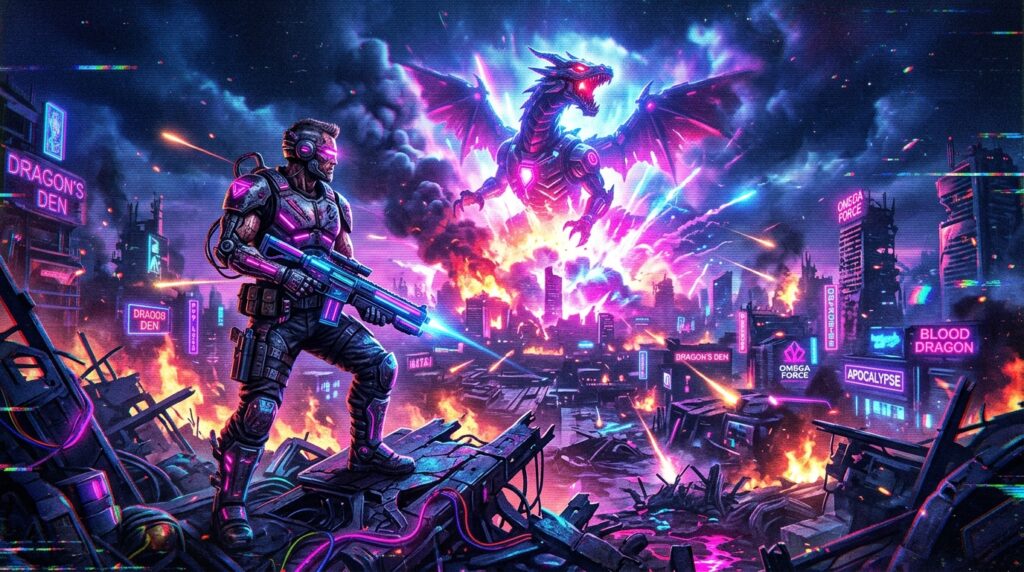
One of the most defining aspects of the game is its neon-infused visual presentation. The world glows with bright pinks, blues, and purples, creating a synthwave-inspired landscape that feels both futuristic and nostalgic. VHS-style filters, scanlines, and pixel effects enhance the retro atmosphere. Combined with a powerful electronic soundtrack, the game creates an immersive cyberpunk experience that stands apart from any other title in the franchise.
A Cult Classic That Still Shines
Despite its relatively short length, Far Cry 3: Blood Dragon has earned a lasting reputation as a cult classic. Its unique combination of humor, style, and fast gameplay continues to attract new players. It represents a creative experiment that broke away from traditional game design and succeeded in delivering something memorable. Even years after its release, it remains a standout example of how bold artistic direction can redefine a gaming experience.
Narrative Crescendo: Embracing the Absurd
The Blood Dragon’s story was never meant to be taken seriously, and the endgame leans heavily into this philosophy. The plot follows Rex Colt as he battles Colonel Sloan, a rogue military commander turned cybernetic supervillain who plans to launch missiles and return the world to a “better” nuclear age. The narrative arc reaches its zenith with dialogue so deliberately terrible it circles back around to brilliance.
The final missions take place across increasingly ridiculous set pieces. Players assault a fortress while riding a weaponized dragon, engage in zero-gravity combat inside a missile silo, and ultimately face Sloan in a boss battle that defies conventional game design wisdom. Rather than introducing complex mechanics, the finale doubles down on what made the campaign special: overwhelming firepower, relentless action, and a complete disregard for realism.
What makes the endgame narrative particularly effective is its commitment to the bit. While other games might break character to deliver emotional beats, The Blood Dragon maintains its B-movie aesthetic until the credits roll. The final confrontation with Sloan includes lines of dialogue that sound ripped from the worst direct-to-video action films of 1986—and that’s precisely the point. The game understands that authenticity to its source material matters more than contemporary storytelling conventions.
Mechanical Mastery: Streamlined Perfection
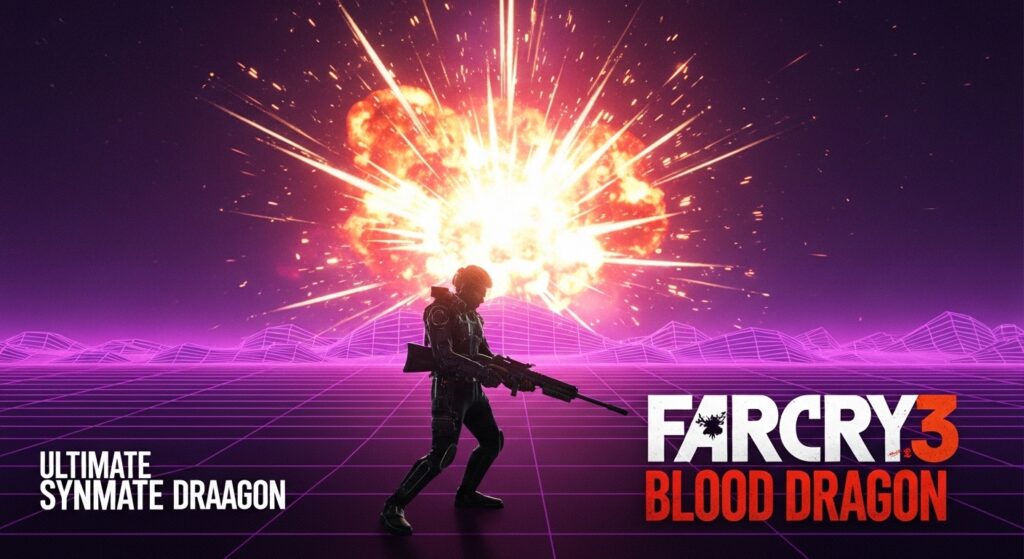
Where the main Far Cry 3 campaign sometimes suffered from bloated mission design and repetitive side activities, The Blood Dragon’s endgame represents focused game design at its finest. The final hours strip away any remaining fat, delivering a concentrated dose of what players actually want: spectacular explosions, creative weapon usage, and the satisfaction of watching enemy bases crumble.
The weapon roster reaches its full potential in these closing moments. The laser-sighted sniper rifle, the quad-barreled shotgun, and the devastating killstar laser all receive their moments to shine. The game wisely avoids introducing new mechanics late in the experience, instead encouraging mastery of the tools players have spent hours refining. This approach creates a sense of earned expertise—by the finale, players feel genuinely powerful because they’ve learned to exploit every system the game offers.
Stealth remains viable but becomes increasingly optional as the campaign progresses. The endgame essentially asks players: “You’ve been careful enough. Now it’s time to have fun.” This shift in design philosophy transforms the final missions into pure power fantasies, where carefully laid plans give way to glorious chaos.
The Blood Dragons: From Threat to Weapon
No discussion of The Blood Dragon’s endgame would be complete without examining the titular creatures. These massive beasts, initially introduced as environmental hazards, become integral to the final mission structure. The game culminates in a sequence where players must ride a cybernetically enhanced The Blood dragon into battle, finally achieving the full potential of the game’s central gimmick.
This progression—from fearing the dragons to commanding them—represents perfect ludonarrative harmony. Rex Colt’s journey from soldier to cyber-superhero mirrors the player’s growing mastery over the game’s systems. By the time the credits roll, both character and player have undergone transformations that feel earned rather than scripted.
The final boss battle against Sloan’s mega-dragon form serves as the ultimate test of dragon-riding mechanics. Players must dodge missile barrages, manage their mount’s health, and identify weak points while soaring through a neon-lit sky. It’s a sequence that would feel at home in a Star Fox game, yet it works perfectly within The Blood Dragon’s established framework.
Aesthetic Consistency: Committing to the Bit
What separates The Blood Dragon’s endgame from lesser homages is its unwavering commitment to aesthetic authenticity. The visual design doesn’t falter in the final hours—if anything, the neon saturation increases. The UI remains aggressively retro, with scan lines and CRT effects that never disappear. The soundtrack, featuring original synthwave compositions by Power Glove, reaches its most bombastic during the finale, creating an auditory experience that perfectly complements the on-screen chaos.
Even the game’s technical limitations become part of the charm. The deliberate low-poly character models and repetitive enemy designs that might seem like budget constraints in other titles feel intentional here—evoking the limited resources of actual 1980s game development. The endgame doesn’t attempt to “upgrade” these elements; instead, it leans into them harder than ever.
Frequently Asked Questions.
1. What is Far Cry 3: Blood Dragon?
It is a standalone sci-fi spin-off of Far Cry 3 with a retro-futuristic theme.
2. Is it connected to the main Far Cry storyline?
No, it is a separate parody-style experience.
3. Who is the main character?
Sergeant Rex “Power” Colt.
4. What makes the game unique?
Its neon visuals and 1980s sci-fi parody style.
5. Is the gameplay realistic?
No, it is exaggerated and arcade-like.
6. What type of weapons are used?
Futuristic laser-based and explosive weapons.
7. Is it open world?
Yes, it features an open-world map.
8. Does it include stealth gameplay?
Yes, but combat is more emphasized.
9. What inspired the game’s design?
1980s action movies and sci-fi culture.
10. Is it a long game?
No, it is relatively short.
11. Does it have multiplayer?
No, it is single-player only.
12. Why is it called Blood Dragon?
It refers to the mutant dragon enemies in the game.
13. What is the visual style?
Neon cyberpunk with VHS retro effects.
14. Why do players still like it?
Because of its humor, style, and fast gameplay.
15. Is it worth playing today?
Yes, especially for fans of retro sci-fi shooters.
Legacy of the Laser-Printed Apocalypse
Nearly a decade after its release, Far Cry 3: The Blood Dragon’s endgame remains a masterclass in focused design. It demonstrates that expansions don’t need to match the scope of their parent games to surpass them in quality. By identifying exactly what players loved about Far Cry 3—the emergent combat, the base liberation mechanics, the sense of escalating power—and stripping away everything else, Ubisoft Montreal created something that felt both fresh and nostalgically familiar.
The game’s finale also proved that standalone downloadable content could compete with full-priced releases. At a time when most DLC offered minor additions to existing campaigns, The Blood Dragon delivered a complete, satisfying experience that stood entirely on its own merits. Its success paved the way for future experimental expansions and demonstrated that players would embrace bold creative risks when executed with confidence.
Conclusion: The Perfect Ending for an Imperfect Hero
As Rex Colt delivers his final one-liner and the screen fades to black, players of Far Cry 3: The Blood Dragon realize they’ve experienced something special. The endgame doesn’t attempt to revolutionize gaming or deliver profound philosophical messages. Instead, it offers something increasingly rare: pure, unadulterated fun without apology or pretense.
In an industry often obsessed with cinematic storytelling and realistic graphics, The Blood Dragon’s conclusion stands as a reminder that games can simply be entertaining. The final hours represent everything that made the campaign memorable—amplified, concentrated, and delivered with the enthusiasm of developers who clearly loved their source material.
For players seeking closure on this neon-soaked adventure, the endgame provides exactly what it promises: dragons, lasers, explosions, and the satisfaction of saving a world that never existed from a threat that never made sense. And in doing so, it cements Far Cry 3: The Blood Dragon as not just a great expansion, but as one of the most distinctive gaming experiences of its generation.
The credits roll to synth music. The screen displays a pixelated “THE END.” And somewhere, in the collective consciousness of gaming culture, the 1980s live on—more vibrant, more ridiculous, and more entertaining than they ever actually were.