A Legend Reborn: From MOBA to Masterpiece
When Netflix announced DOTA: Dragon’s Blood on February 16, 2021, the gaming world witnessed a historic moment—the transformation of one of the most complex and lore-rich multiplayer games into an accessible, emotionally resonant animated epic. Premiering globally on March 25, 2021, this adult animated fantasy series didn’t merely adapt Valve’s acclaimed Dota 2; it elevated the entire concept of video game storytelling, proving that competitive gaming universes could support deeply personal narratives
.
Developed by showrunner Ashley Edward Miller (X-Men: First Class, Thor, Black Sails) and animated by the renowned Studio Mir (The Legend of Korra, Voltron: Legendary Defender), DOTA: Dragon’s Blood represents a bold creative collaboration between South Korean animation excellence and Hollywood storytelling expertise. The result is an eight-episode inaugural season (referred to as “Book One”) that successfully “fuses plenty of existing Dota lore with an original story for eight episodes of humor and action in a fantasy universe”
.
The Story: Dragons, Demons, and Destiny
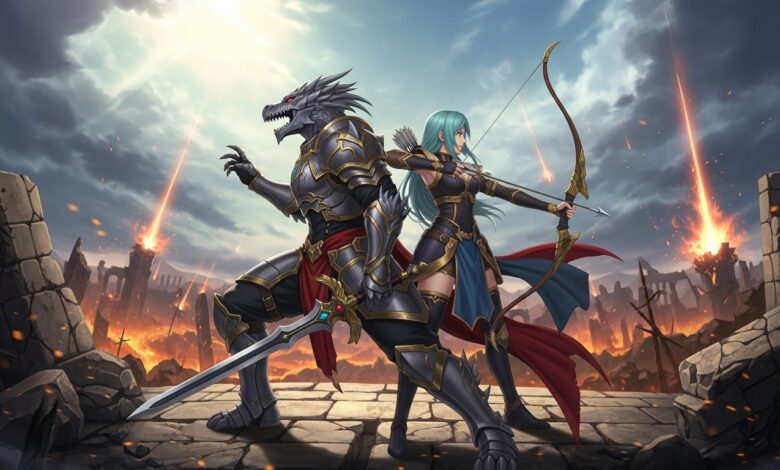
At the heart of DOTA: Dragon’s Blood lies the journey of Davion, a conflicted yet courageous Dragon Knight devoted to wiping the scourge of dragons from the face of the world. In a fatal battle between the demon Terrorblade and the ancient Ember Eldwurm Slyrak, the elder dragon merges his soul with Davion, gifting the knight extraordinary power at the cost of his very identity
.
Accompanied by Princess Mirana of the Moon—a noble warrior on a secret mission of her own—and her loyal companion Marci, Davion becomes embroiled in events far larger than simple dragon slaying. Terrorblade seeks to collect the souls of all Eldwurms to remake reality in his terrifying image, forcing Davion to harness the dragon within to stop this cosmic threat
.
The narrative weaves together multiple storylines with Shakespearean complexity:
- The Invoker, a mysterious mage of unimaginable power, manipulates events from behind the scenes while pursuing his own agenda
- Selemene, the Dark Goddess of the Moon, demands worship and obedience from her followers including the fierce Luna
- Fymryn, an elven lotus thief, discovers she is the reincarnation of Mene and holds the key to ancient mysteries
- Bram, Davion’s loyal squire, provides human grounding amid the supernatural chaos
Visual Splendor: Studio Mir’s Animated Excellence
One of the series’ most striking achievements is its visual presentation. Studio Mir delivers “cinematic animation” that blends anime influences with Western animation sensibilities, creating a distinctive aesthetic that sets DOTA: Dragon’s Blood apart from typical video game adaptations
.
The animation particularly shines during action sequences. Reviewers noted that the series doesn’t shy away from visceral combat—”several people being ripped in half or their skulls crushed” demonstrates the adult-oriented approach that respects both the source material’s intensity and mature audience expectations
. Studio Mir flexes its technical muscles throughout, particularly with the Invoker’s magical displays, transforming what in-game appears as simple combat abilities into spectacular visual spectacles of “glowing symbols in the air”
.
The production team successfully mixes computer-animated characters with hand-drawn elements in major fight scenes, though this combination occasionally becomes “awkward in large crowd shots” during the season’s climactic moments
. Flashback sequences receive particularly stylized treatment, enhancing emotional impact through distinctive visual approaches.
From Screen to Game: The Reverse Adaptation
Perhaps the most fascinating aspect of DOTA: Dragon’s Blood is its impact on the original game—a rare example of transmedia synergy where the adaptation influenced its source material. During The International 2021, Valve announced that Marci, the silent sidekick character created specifically for the animated series, would be added to Dota 2 as a playable hero
.
This announcement, delivered through a video featuring 2D animation from Studio Mir, delighted fans and demonstrated Valve’s commitment to the series’ canonical status. Marci officially joined the game as part of gameplay update 7.30e on October 28, 2021, bringing her unique fighting style from the screen to the battlefield
.
This reverse adaptation validates DOTA: Dragon’s Blood not as mere licensed content, but as genuine expansion of the Dota universe. Characters, locations, and concepts introduced in the series became legitimate parts of the game’s ongoing evolution.
Critical Reception: Striking the Right Balance
DOTA: Dragon’s Blood achieved impressive critical validation for a video game adaptation. Rotten Tomatoes reports a 75% approval rating based on 12 reviews, with an average score of 7.60/10. The critics’ consensus notes that “while knowledge of the game isn’t necessary, it might have been nice if Dota: Dragon’s Blood had translated more of its narrative prowess to the small screen”
.
This reception highlights the series’ greatest achievement: accessibility. IGN’s review emphasized that the show is “a fun and rousing adventure in its own right, whether you’ve played the MOBA or not,” successfully welcoming newcomers while providing “fun nods to items, places, and things” for existing fans
. The series treats Dota 2’s complex lore not as homework for viewers, but as bonus texture for those familiar with the game.
However, some criticism emerged regarding character development. Reviewers noted that supporting characters occasionally felt “a bit flat” and that the season could have used “more time to flesh out” these personalities
. The narrative pacing sometimes sacrificed depth for plot momentum, leaving certain relationships and motivations underexplored.
The Complete Saga: Three Books of Epic Fantasy
Following the success of Book One, Netflix expanded the story across two additional seasons:
Book Two premiered on January 18, 2022, originally scheduled for January 6 but delayed slightly. This season deepened the political intrigue as Mirana returns to her homeland, the Helio Imperium, while Davion confronts the consequences of his draconic merger. The eight-episode season raised stakes considerably, introducing new threats and forcing difficult choices upon established characters
.
Book Three concluded the saga on August 11, 2022, bringing the trilogy to a definitive close. The final eight episodes resolved long-running storylines including the conflict with Terrorblade, the mysteries surrounding Filomena and the Invoker, and Davion’s ultimate fate as both man and dragon. The series finale, “Consider Phlebas,” posed profound questions about whether “creation requires destruction—and painful sacrifices”
.
Across all three seasons (24 episodes total), DOTA: Dragon’s Blood maintained consistent production quality while expanding its scope from intimate character drama to cosmic conflict. The complete narrative arc transforms Davion from a simple dragon slayer into a figure of mythological significance, while Mirana’s journey from princess to goddess reflects themes of power, responsibility, and sacrifice.
Cultural Impact and Legacy
DOTA: Dragon’s Blood represents more than successful adaptation—it demonstrates the potential for competitive gaming properties to support narrative storytelling. Dota 2, like many MOBAs, lacks traditional plot progression; matches exist as isolated contests without narrative continuity. The series extracted characters, locations, and concepts from this framework, weaving them into cohesive drama that enhanced rather than replaced the game’s appeal.
The show’s success influenced industry perceptions about video game adaptations. Following DOTA: Dragon’s Blood, Netflix expanded its gaming-related content significantly, while other streaming platforms invested similarly in animated adaptations of gaming properties. The series proved that “the cinematic animation, acting and music are simply next level” when talented creators treat source material with respect rather than mere exploitation
.
For Dota 2 specifically, the series revitalized interest in the game’s lore. Characters like the Invoker, previously known primarily for mechanical complexity, gained emotional depth through Troy Baker’s voice performance and the animated narrative. Locations such as the Nightsilver Woods and Temple of Mene transformed from background art into meaningful settings with history and significance.
The Creative Vision: Voices Behind the Legend
The series’ emotional resonance stems from exceptional voice performances across the cast:
- Yuri Lowenthal (Davion) captures the Dragon Knight’s internal conflict between human morality and draconic power
- Lara Pulver (Mirana) conveys both royal authority and vulnerable determination
- Tony Todd (Slyrak) brings gravitas to the ancient dragon’s wisdom and wrath
- Troy Baker (The Invoker) delivers the complex mage’s cryptic dialogue with mesmerizing precision
- Kari Wahlgren (Luna) embodies the Moonrider’s fierce devotion to her goddess
- Freya Tingley (Fymryn) portrays the elven thief’s journey from self-interest to cosmic significance
Composer Dino Meneghin provides an epic score that enhances emotional beats while maintaining the fantasy atmosphere. The music bridges the gap between the game’s energetic combat themes and the series’ dramatic requirements.
Conclusion: A New Standard for Gaming Adaptations
DOTA: Dragon’s Blood succeeds where countless video game adaptations falter by understanding that respect for source material and accessibility for newcomers aren’t mutually exclusive. The series delivers “eight episodes of humor and action” that satisfy Dota 2 veterans while welcoming fantasy fans unfamiliar with the game
.
From its March 2021 debut through its August 2022 conclusion, the trilogy maintained ambitious storytelling standards across 24 episodes of animated excellence. It transformed a multiplayer battle arena into Shakespearean fantasy, gave depth to previously one-dimensional characters, and even influenced the game’s ongoing development through Marci’s addition.
For viewers seeking epic fantasy with complex characters, stunning animation, and genuine emotional stakes, DOTA: Dragon’s Blood delivers a complete narrative journey. For Dota 2 players, it offers the cohesive story that the game’s fragmented lore always promised but never quite delivered.