The Thermal Secrets Behind the Targaryen Legacy
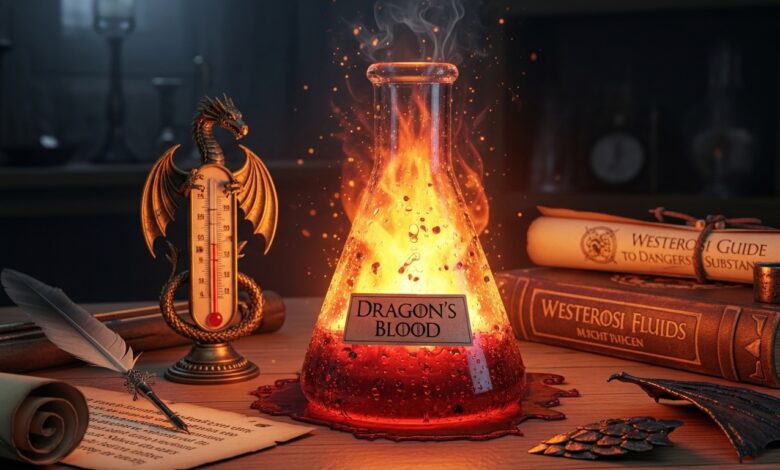
April 2026 — In the brutal, fire-forged world of George R.R. Martin’s A Song of Ice and Fire and its HBO adaptations, dragons represent the ultimate weapon of mass destruction. Yet while fans have long debated the temperature of dragon fire, a equally fascinating question has emerged: how hot is dragon blood itself? This crimson fluid, flowing through the veins of both the colossal beasts and their Targaryen riders, carries thermal properties that blur the line between biology and magic.
The Evidence: Smoking Blood and Scorched Battlefields
Recent analysis of both Game of Thrones and House of the Dragon reveals compelling evidence that dragon blood runs remarkably hot—though perhaps not as scorching as the flames these creatures produce.
During the pivotal battle at Rook’s Rest in House of the Dragon Season 2, viewers witnessed Sunfyre—wounded by Meleys’s claws—showering soldiers below with blood that “burns them and smokes upon contact”
. This visual spectacle raises critical questions: Is dragon blood as hot as dragon fire? Hot enough to burn, or lethal enough to kill?
George R.R. Martin’s novels provide additional context. In A Dance with Dragons, when Drogon is speared during the fighting pit chaos, Daenerys observes that “smoke rose from the wound” and “his blood was smoking too, where it dripped upon the ground”
. This suggests that dragon blood maintains a temperature high enough to vaporize upon contact with cooler air—a phenomenon that defies conventional biology.
Temperature Estimates: The Science of Smoking Blood
To understand how hot dragon blood might be, we must first examine dragon fire temperatures. Scientific analysis of the Game of Thrones universe suggests dragon fire reaches extraordinary temperatures:
- Conservative estimates place dragon fire between 2,400°F to 3,500°F (1,315°C to 1,927°C)—hot enough to melt limestone, sandstone, and iron
- Extreme calculations by Reddit user MrBananas suggest temperatures reaching 10,000°F—approximately one-quarter the surface temperature of the sun
- Physics-based analysis of Drogon melting the Iron Throne indicates energy outputs of 227 megawatts, requiring temperatures sufficient to deliver 6.81 gigajoules of energy in mere seconds
Given these figures, dragon blood likely maintains a temperature significantly above human body temperature but below full flame intensity. The smoking effect observed when dragon blood contacts air suggests temperatures between 300°F to 600°F (150°C to 315°C)—hot enough to cause immediate burns and create steam/vapor but not sufficient to instantly incinerate targets like full dragon fire
.
The Blood of the Dragon: Targaryen Heat Resistance
The thermal properties of dragon blood extend beyond the beasts themselves to their human riders. House Targaryen carries “the blood of the dragon”—a genetic and mystical inheritance that grants remarkable heat tolerance
.
According to A Wiki of Ice and Fire, “some Targaryens also have a high tolerance of heat, though they are by no means immune to fire”
. This manifests in several documented ways:
Physiological Adaptations: Daenerys Targaryen prefers bathwater “hotter than most people would find tolerable” and can handle heated dragon eggs that burn her handmaidens
. In The Sworn Sword, Egg (Aegon V Targaryen) thrives in Dorne’s scorching climate while his companion Dunk suffers, suggesting genetic adaptation to heat
.
The Funeral Pyre Phenomenon: Daenerys’s survival of Khal Drogo’s funeral pyre—emerging unscathed with three hatched dragons—represents the ultimate demonstration of dragon blood’s thermal protection. Her iconic declaration “Fire cannot kill a dragon”
speaks to this unique inheritance, though George R.R. Martin has clarified that such immunity is rare and magical rather than purely genetic
.
The Limits of Resistance: Despite these abilities, Targaryens are not truly fireproof. Daenerys burns her hands on a heated spear in the fighting pits, and her skin blisters from Drogon’s hot breath without flame
. King Aegon II suffered horrific burns when his brother’s dragon attack melted his armor onto his skin
. This suggests dragon blood provides heat resistance rather than true immunity—a gradient of protection that varies by individual and circumstance.
Magical Thermodynamics: Blood as Living Flame
The thermal properties of dragon blood cannot be explained by conventional biology alone. Dragons in Martin’s universe are “literally made of flame”
—creatures of magic as much as flesh. This fundamental nature suggests their blood operates on principles closer to liquid fire than biological fluid.
Septon Barth’s theories, documented in The World of Ice & Fire, propose that dragons were created through blood magic—engineered by Valyrian sorcerers who combined wyverns with firewyrms
. If true, dragon blood may contain elemental fire in liquid form, explaining its smoking properties and the Targaryen affinity for heat.
The blood magic connection extends to dragon hatching. Daenerys’s pyre survival required blood sacrifice—Mirri Maz Duur’s death and her own willingness to embrace the flames
. This suggests dragon blood responds to blood magic, its thermal properties amplifying when exposed to ritual sacrifice and intense heat.
Comparative Analysis: Dragon Blood vs. Dragon Fire
Table
| Property | Dragon Fire | Dragon Blood |
|---|---|---|
| Temperature Range | 2,400°F – 10,000°F+ (1,315°C – 5,537°C+) | ~300°F – 600°F (150°C – 315°C) [estimated] |
| Effect on Contact | Instant carbonization, stone melting | Severe burns, smoking/vaporization |
| Duration | Sustained flame jets | Brief contact, rapid cooling |
| Magical Component | High (plasma-like properties) | Moderate (blood magic affinity) |
| Targaryen Interaction | Lethal to most, survivable by few | Tolerable with resistance |
The Color of Heat: Blue, Green, and Orange Flames
The Game of Thrones universe features multiple flame types with varying thermal properties. According to real-world physics applied to the fictional setting, flame color indicates temperature: blue fire burns hottest, followed by green, then orange
. However, magical fire may follow different rules.
Viserion’s blue dragon fire (as an ice dragon) cut through the Wall in the North, suggesting temperatures exceeding conventional dragon fire
. Wildfire burns with green flames, while standard dragon fire appears orange-red. Dragon blood, when spilled, produces smoke rather than colored flame, indicating it operates through different thermal mechanisms—perhaps as a heat reservoir rather than active combustion
.
Biological Implications: The Cost of Fire Blood
The thermal properties of dragon blood come with severe biological costs. Targaryen history documents stillborn infants with draconic deformities—scales, tails, and wings—suggesting that concentrated dragon blood can overwhelm human biology
. Rhaego’s birth as “inhuman, hideously deformed and covered in dragon-like scales” and Visenya’s emergence “twisted and malformed” indicate that dragon blood’s heat and magic prove fatal when too concentrated
.
This creates a tragic paradox: the same blood that grants Targaryens their power and heat resistance becomes lethal when inherited in excess. The Targaryen practice of incest—marrying brother to sister—concentrated these traits, preserving dragon-bonding ability while increasing the risk of monstrous births and madness
.
Modern Gaming Interpretations
The A Song of Ice and Fire Roleplaying Game by Green Ronin Publishing translates these thermal properties into game mechanics. Characters with Valyrian bloodlines gain heat resistance traits, though the system maintains that “they are by no means immune to fire”
. The Blood of Dragons MUD (Multi-User Dungeon) incorporates blood temperature as a narrative element, with Targaryen characters able to tolerate environments that would incapacitate others
.
Conclusion: The Eternal Flame Within
Dragon blood in the Game of Thrones universe represents a unique fantasy element—biological fluid imbued with magical thermal properties. While not as catastrophically hot as dragon fire, it maintains sufficient heat to burn, smoke, and potentially kill ordinary humans upon contact. For those carrying the blood of the dragon, this same substance provides protection against heat, creating a genetic elite capable of surviving conditions that would destroy lesser mortals.