A Groundbreaking Collaboration Between Gaming and Streaming Giants
When Netflix and Valve Corporation joined forces to create DOTA: Dragon’s Blood, they weren’t simply producing another video game adaptation—they were crafting an ambitious animated fantasy epic that would redefine what audiences expect from the genre. Released in March 2021, this anime-influenced series took the rich but largely unexplored lore of the DOTA 2 universe and transformed it into a sweeping narrative spanning three seasons, 24 episodes, and countless hours of breathtaking animation that left viewers demanding more.
The collaboration represented a perfect marriage of complementary strengths. Netflix brought its global distribution platform and proven track record with animated content, while Valve contributed one of gaming’s most passionate fanbases and a fantasy universe teeming with iconic characters, complex mythology, and untapped storytelling potential. The result exceeded all expectations, earning critical acclaim for its mature storytelling, stunning visuals, and respectful treatment of source material while successfully introducing millions of new viewers to the world of DOTA.
The Legend of Davion: A Hero’s Journey Reimagined
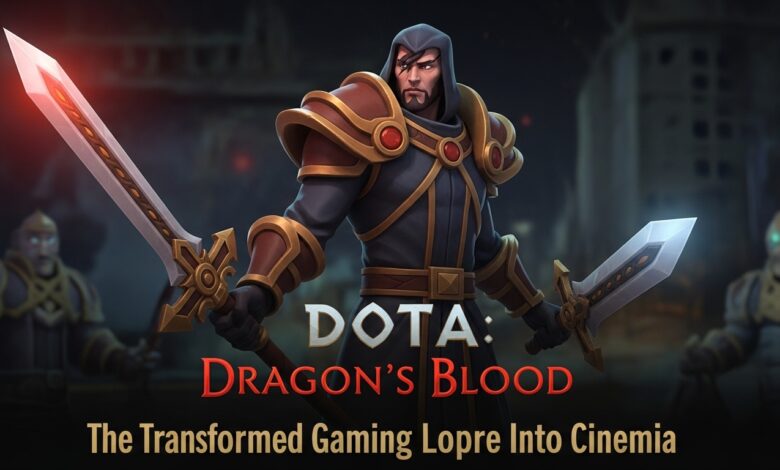
At the heart of DOTA: Dragon’s Blood lies Davion, the Dragon Knight—a character familiar to millions of DOTA 2 players but given unprecedented depth and humanity in this animated retelling. The series follows this renowned dragon hunter as he encounters an elder dragon and becomes intertwined with a cosmic force that transforms his destiny forever. This encounter doesn’t merely provide supernatural abilities; it creates an internal conflict between Davion’s human consciousness and the ancient dragon Slyrak’s powerful essence sharing his body.
The narrative brilliance of DOTA: Dragon’s Blood lies in how it uses this possession premise to explore themes of identity, duty, and sacrifice. Davion isn’t a simple action hero—he’s a man torn between his oath to protect the innocent and the destructive impulses of the dragon within. This internal struggle provides emotional weight that elevates the series above typical fantasy fare, creating genuine investment in his journey across all three seasons.
Joining Davion is Princess Mirana, whose quest to recover the stolen Lotuses of Mene provides the series’ central MacGuffin while developing her into one of animation’s most compelling female protagonists. Her relationship with Davion evolves naturally from reluctant allies to something deeper, avoiding rushed romantic tropes in favor of genuine connection forged through shared adversity. The series dedicates significant screen time to Mirana’s own struggles with leadership, faith, and destiny, ensuring she never feels like a supporting character in her own story.
A Universe Expands: Lore, Mythology, and World-Building
DOTA: Dragon’s Blood distinguishes itself through exceptional world-building that respects both newcomers and longtime fans. The series introduces the Eight Eldwurms—cosmic dragons representing fundamental forces of creation including Fire, Water, Earth, Air, Void, Ion, Chaos, and Light. These aren’t mere monsters to be slain but primordial entities whose conflicts shape reality itself, providing stakes that feel genuinely apocalyptic.
The showrunners, led by acclaimed writer Ashley Edward Miller (Thor, X-Men: First Class), wove intricate mythology connecting disparate elements of DOTA 2’s lore into a cohesive narrative tapestry. Ancient prophecies, divine pantheons, interdimensional invaders, and political intrigue between kingdoms create a world that feels lived-in and historically grounded. Every location, from the besieged kingdom of Dragon Hold to the mystical realm of the Invoker’s tower, possesses distinct visual identity and cultural texture.
The Invoker, portrayed with mesmerizing complexity by Troy Baker, serves as both mentor and antagonist throughout the series. This millennia-old wizard’s motivations remain deliciously ambiguous—is he protecting reality or pursuing selfish vengeance? His relationship with his daughter Filomena provides the emotional core of later seasons, exploring themes of parental love, grief, and the corrupting nature of immortality. These character-driven moments amid cosmic conflicts demonstrate the writers’ commitment to emotional authenticity.
Animation Excellence: Studio Mir’s Visual Mastery
The visual presentation of DOTA: Dragon’s Blood represents some of the finest work from Studio Mir, the South Korean animation house renowned for The Legend of Korra and Voltron: Legendary Defender. Their signature style—combining fluid 2D character animation with dynamic 3D backgrounds—creates action sequences of breathtaking kinetic energy while maintaining the emotional expressiveness of traditional animation.
Dragon battles showcase this technical excellence spectacularly. When Davion transforms or when elder dragons clash across skies, the animation conveys massive scale and devastating power through careful attention to weight, timing, and environmental destruction. These aren’t weightless CGI spectacles but visceral confrontations where every collision feels impactful. The color design deserves particular praise, with each dragon type possessing distinct visual signatures—Slyrak’s burning oranges and reds contrasting beautifully with the void-black of Auroth or the crystalline blues of Lirrak.
Character designs successfully translate DOTA 2’s distinctive aesthetic into animated form while adding necessary detail for television. Heroes remain immediately recognizable to game players—Terrorblade’s demonic menace, Luna’s fierce determination, Marci’s expressive silence—while gaining nuanced facial animation and body language that conveys complex emotions wordlessly. The costume and environmental design draws inspiration from diverse cultures, creating a fantasy world that feels globally appealing rather than generically Western.
Voice Acting and Sound Design: Bringing Legends to Life
The voice cast assembled for DOTA: Dragon’s Blood represents industry excellence across the board. Yuri Lowenthal delivers a career-defining performance as Davion, capturing the character’s heroism, vulnerability, and internal conflict with remarkable range. His scenes opposite Troy Baker’s Invoker crackle with tension, two immortals circling each other verbally while contemplating cosmic violence.
Lara Pulver brings regal authority and underlying warmth to Mirana, making her leadership struggles feel authentic rather than perfunctory. The supporting cast includes standout performances from Tony Todd as the terrifying Selemene, Josh Keaton as the vengeful Bram, and Freya Tingley as the mysterious Fymryn. Each actor understands that they’re playing mythic figures while maintaining grounding humanity.
The sound design complements these performances impeccably. Dragon roars carry appropriate bass and reverberation, magical spells possess distinct audio signatures, and environmental ambience creates immersive atmosphere. The musical score by Dino Meneghin blends orchestral fantasy tradition with electronic elements, creating themes that enhance emotional beats without overwhelming them. The main title theme alone has become iconic among fans, instantly recognizable and appropriately epic.
Mature Storytelling: Complexity for Adult Audiences
DOTA: Dragon’s Blood refuses to talk down to its audience, embracing mature themes and narrative complexity rare in game adaptations. The series explores religious fanaticism through the Dark Moon Order, examining how faith can be weaponized and corrupted. Political intrigue between kingdoms feels genuinely consequential, with betrayals and alliances shifting based on realistic motivations rather than plot convenience.
Violence carries weight in this world—characters die, sometimes permanently, and their losses impact surviving cast members meaningfully. The show doesn’t revel in gore but neither does it sanitize the brutality of its medieval fantasy setting. Sexual content and relationships are portrayed with similar maturity, present when narratively appropriate but never gratuitous.
This adult approach extends to the series’ philosophical undertones. Questions about the nature of heroism, the price of power, and whether ends justify means are woven throughout the narrative. Characters face impossible choices with no clear correct answers, and the show respects viewers enough to let them draw their own conclusions about controversial decisions.
Seasonal Evolution: A Complete Epic
Across three seasons—Book One: Dragon’s Blood (2021), Book Two: Fire and Blood (2022), and Book Three: The Third Book (2022)—the series evolved from promising beginning to satisfying conclusion. Each season expanded the scope while deepening character relationships, with the final episodes delivering emotional payoffs that rewarded dedicated viewing.
Book One established the core dynamics and central conflict, introducing Davion’s transformation and the hunt for the Lotuses. Book Two expanded the cosmic scope, revealing more about the Eldwurms and the existential threat of Terrorblade. The final season brought these threads together in a conclusion that balanced spectacular action with genuine emotional resolution, particularly regarding the Invoker’s millennia-long quest and Davion’s acceptance of his dual nature.
The pacing throughout demonstrates admirable confidence. The series never rushes its moments, allowing quiet character scenes to breathe while building toward explosive set pieces. This rhythm creates investment that makes the climactic confrontations feel earned rather than obligatory.
Cultural Impact and Legacy
DOTA: Dragon’s Blood achieved something rare for video game adaptations: critical respect and audience enthusiasm in equal measure. The series holds strong ratings on review aggregators, with particular praise for its animation quality and narrative ambition. For DOTA 2 specifically, it introduced the game’s complex lore to mainstream audiences, potentially attracting new players curious about the universe’s origins.
The show’s success influenced subsequent game-to-television adaptations, demonstrating that respectful, high-quality treatment of source material could satisfy existing fans while attracting new ones. Its mature approach helped establish Netflix’s gaming adaptations as prestige content rather than mere marketing extensions.
Though concluded after three seasons, DOTA: Dragon’s Blood leaves a rich legacy. The characters introduced—particularly the fully realized versions of Davion and Mirana—have become definitive interpretations for many fans. The expanded lore regarding the Eldwurms and the nature of the DOTA universe’s cosmology has influenced how players understand the game world’s mythology.
Conclusion: A New Standard for Gaming Adaptations
DOTA: Dragon’s Blood represents the gold standard for what video game adaptations can achieve when treated with creative respect and artistic ambition. By assembling top-tier writing, animation, and voice talent, Netflix and Valve created not merely a promotional tool for DOTA 2, but a standalone fantasy epic worthy of comparison to genre classics.
For fans of animation, fantasy, or simply excellent storytelling, the series offers 24 episodes of consistently impressive entertainment. For DOTA 2 players, it provides the lore exploration they’ve long desired. And for the uninitiated, it serves as the perfect entry point into one of gaming’s most complex and rewarding universes.