The Gilded Hoard: Unraveling the Ancient Bond Between Dragons and Gold
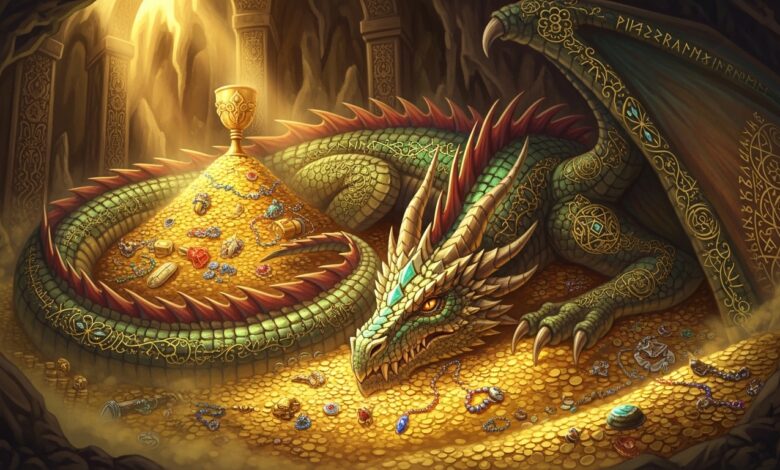
The image of a massive dragon coiled atop a mountain of glittering gold has become one of the most enduring and recognizable tropes in fantasy literature and mythology spanning cultures and centuries with remarkable consistency. From the treasure-hoarding Smaug in J.R.R. Tolkien’s The Hobbit to the ancient wyrms of Chinese legend guarding imperial fortunes the association between these magnificent reptilian creatures and precious metals seems almost intrinsic to their nature. Yet this obsession raises fascinating questions about its origins and meanings. Why should creatures of such immense power and ancient wisdom concern themselves with material wealth that serves no practical purpose for beings who neither trade nor consume? The answer lies buried deep in the archaeological layers of human storytelling revealing psychological cultural and symbolic dimensions that continue to resonate with modern audiences.
The earliest documented connections between dragons and treasure emerge from the mythological traditions of ancient civilizations where these creatures served as guardians rather than mere accumulators. In Mesopotamian mythology the mušḫuššu a dragon-like creature adorned the gates of Babylon as a protective symbol rather than a greedy hoarder. The Greek drakon derived from the verb meaning to watch or guard with a sharp eye originally described serpents assigned to protect sacred spaces and valuable objects. The famous dragon Ladon coiled around the tree bearing golden apples in the Garden of the Hesperides not because he desired the fruit for himself but because his divine purpose demanded vigilance. These early associations established the dragon as the ultimate security system a being whose terrible power made it the ideal protector for treasures that gods and heroes wished to keep from mortal hands.
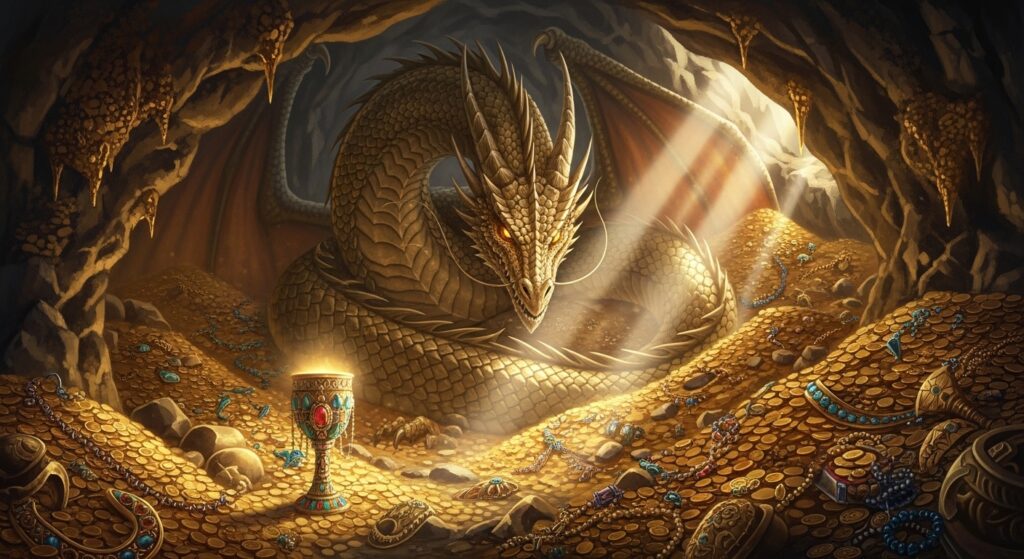
The evolution from guardian to accumulator reflects broader shifts in how human societies conceptualized wealth and power. As coinage and standardized currency emerged in ancient Lydia and spread throughout the Mediterranean world gold transformed from decorative material into concentrated portable power. The dragon’s hoard became a metaphor for the accumulation of wealth beyond any practical need representing the dangers of avarice and the corrupting influence of unearned riches. The Old English poem Beowulf presents one of the most influential literary treatments of this theme featuring a dragon who awakens to rage and destruction when a single cup is stolen from his treasure mound. The poem explicitly connects the hoard to the dragon’s mortality noting that the treasure had been buried with a long-dead civilization offering no benefit to the living or the beast who claimed it. This portrayal established the dragon’s gold obsession as fundamentally irrational and destructive a curse upon the creature rather than a source of genuine satisfaction.
Medieval European folklore expanded upon these themes embedding the dragon’s hoard within Christian moral frameworks. The creature became an explicit symbol of Satan and the deadly sin of greed while the knight who confronted the dragon represented Christ or Christian virtue triumphing over corruption. Saint George’s legendary defeat of the dragon often included the liberation of treasure or princesses suggesting that the hoard represented resources wrongfully withheld from proper Christian circulation. Bestiaries of the period described dragons as drawn to the golden color of ripe fruit and the glitter of sunlight on water explaining their attraction to gold as an extension of natural instincts perverted into sinful excess. These religious interpretations reinforced the idea that dragon hoards were unnatural accumulations that disrupted the proper order of medieval society where wealth should flow through patronage charity and commerce rather than remaining static and hidden.
The psychological dimensions of dragon hoarding reveal much about human attitudes toward wealth and security. Gold represents permanence in a world of decay and change offering a hedge against mortality that appeals to creatures of immense longevity. Dragons who might live for millennia witness the rise and fall of civilizations the erosion of mountains and the extinction of species. In such a context gold provides something that outlasts memory itself a tangible connection to permanence in an impermanent world. The act of hoarding becomes a defense against time and loss an attempt to build something that will not fade or betray. This interpretation suggests that dragon greed stems not from base desire but from existential anxiety the same fear of oblivion that drives human accumulation of wealth status and legacy.
Freudian analysis offers another lens through which to examine the dragon’s treasure suggesting that the hoard represents sublimated sexual energy and the possessive instincts of the id. The cave or mountain chamber where dragons dwell resembles the womb a secure enclosed space where the creature can surround itself with comforting valuables. The phallic symbolism of the serpentine body coiled around the round coins and jewels creates a complex image of self-contained satisfaction that requires no external validation or partnership. From this perspective the dragon’s violent response to theft represents not mere anger at property loss but a fundamental violation of psychic integrity an intrusion into the sacred space where the dragon has constructed its identity. The hero who steals from or slays the dragon becomes a figure of psychological liberation freeing resources that have been pathologically withheld from circulation.
Modern fantasy literature has increasingly complicated the simple equation of dragons with mindless greed offering more nuanced explanations for their attraction to precious metals. In Anne McCaffrey’s Dragonriders of Pern series dragons are drawn to valuable materials because they contain trace elements necessary for their biological development particularly the phosphine-producing organisms that allow fire-breathing. This scientific rationalization removes moral judgment from the behavior presenting it as natural instinct rather than sinful excess. Naomi Novik’s Temeraire series explores dragons as intelligent beings with their own economic systems and concepts of value suggesting that their interest in gold reflects cultural traditions of gift exchange and status display rather than inherent greed. These reinterpretations acknowledge the trope’s power while offering fresh perspectives that question whether human observers have properly understood dragon motivations.
The economic symbolism of dragon hoards extends beyond individual psychology into critiques of economic systems and wealth distribution. Marxist interpretations identify the dragon with capitalist accumulation the concentration of resources in few hands while the surrounding community suffers want. The dragon who sleeps upon unused wealth while peasants starve nearby mirrors the absentee landlord or industrialist who extracts value without contributing to social welfare. From this perspective the dragon-slaying hero represents revolutionary consciousness the force that redistributes hoarded resources back into productive circulation. The fact that many dragon stories end with the distribution of the hoard to local communities supports this reading suggesting that the narrative serves as a fantasy of economic justice where violent intervention corrects systemic inequality.
Environmental readings of dragon mythology offer yet another framework for understanding the gold obsession. Dragons often inhabit wild spaces mountains caves and forests that resist human exploitation and development. The hoard becomes a symbol of nature’s intrinsic value resources that exist beyond human utility and economic calculation. The dragon’s refusal to circulate gold mirrors the ecological principle that natural systems do not operate according to human economic logic. From this perspective the hero who takes the hoard represents destructive extraction the force that converts intrinsic value into exchange value disrupting ecosystems for temporary human gain. The dragon’s rage at theft becomes righteous defense of wild spaces against encroaching civilization rather than mere possessiveness.
Game theory and evolutionary psychology provide more pragmatic explanations for why dragon hoarding persists as a narrative trope across cultures. In biological terms displaying resources signals fitness and establishes dominance hierarchies. A dragon surrounded by gold demonstrates its power to defend valuable territory warning rivals and attracting potential mates. The impracticality of the hoard from a human economic perspective actually enhances its signaling value precisely because it represents pure waste the ultimate demonstration that the dragon commands resources beyond survival needs. This conspicuous consumption parallels human behaviors from peacock tails to luxury automobiles where costliness itself becomes the point. The dragon’s hoard thus functions as an honest signal of capability that cannot be faked by weaker competitors.
Contemporary fantasy gaming and fiction continue to evolve the dragon-gold relationship often subverting or complicating traditional tropes. Dungeons & Dragons and its descendants have established dragons as creatures whose hoards magically enhance their power creating practical incentives for accumulation beyond mere psychology. Some settings present dragons as bankers and investors whose centuries-long lifespans make them ideal stewards of intergenerational wealth. Others explore dragons who have moved beyond material accumulation collecting knowledge art or magical artifacts instead of mere currency. These variations demonstrate the flexibility of the core concept which can support everything from straightforward adventure narratives to complex philosophical explorations of value meaning and desire.
The persistence of dragon hoards in popular imagination speaks to something fundamental in human cognition about wealth and danger. Gold represents human achievement the transformation of raw earth into standardized value through technology and social agreement. The dragon represents nature’s indifference to human constructs its power utterly independent of economic systems. When these two symbols combine they create a narrative tension between civilization and wilderness between earned and taken wealth between security and risk. The dragon on its hoard embodies the terrifying possibility that all human value exists only at the pleasure of forces that do not recognize or respect human constructs. Defeating the dragon and claiming the hoard represents not just economic gain but existential validation the assertion that human systems can prevail against natural chaos.