Table of Contents
Introduction
In the world of Game of Thrones, few concepts are as powerful, mysterious, and symbolic as dragon blood. It is not just a physical trait tied to the Targaryen lineage, but a representation of fire, dominance, destiny, and destruction. The idea of “dragon blood” goes beyond biology and becomes a mythic force that shapes the fate of kingdoms. It represents the belief that some individuals are born with an inherited right to rule, tied to dragons, fire, and ancient Valyrian power.
This article explores what dragon blood truly means in Game of Thrones, how it influences key characters, and why it comes with a heavy price. It also examines how fire and power are deeply connected in the series and why those who claim dragon blood often face tragic consequences.
The Meaning of Dragon Blood in Westeros
Dragon blood in Game of Thrones refers primarily to the Targaryen bloodline, the only surviving family of dragonlords from Old Valyria. The Targaryens are known for their ability to bond with dragons, survive fire in certain cases, and maintain a mystical connection to these legendary creatures.
However, dragon blood is more than genetics. It symbolizes:
- Power tied to ancient magic
- The right to rule through conquest
- A connection to fire and destruction
- A legacy of both greatness and madness
In Westeros, dragon blood is both revered and feared. It is seen as a blessing that allows control over dragons, but also a curse that leads to instability and obsession with power.
Fire as the Essence of Dragon Blood
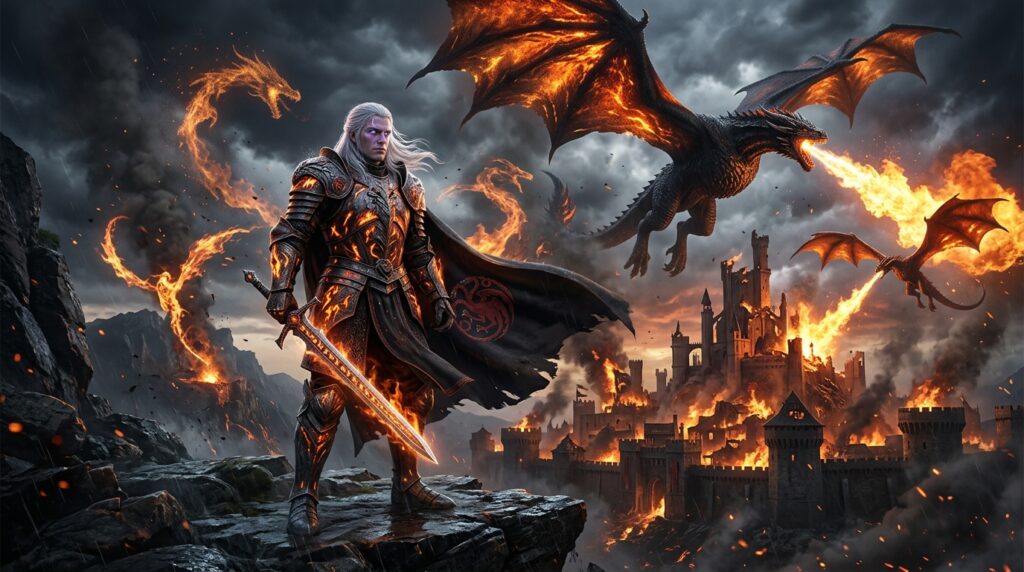
Fire is the central symbol of dragon blood. Dragons themselves are creatures of fire, and their riders are often described as being “born of flame.”
For the Targaryens, fire represents:
- Strength and dominance
- Purification through destruction
- Rebirth and transformation
- The uncontrollable nature of power
This connection is most clearly seen in Daenerys Targaryen, who emerges unburnt from flames on multiple occasions. These moments reinforce the idea that dragon blood is not just inheritance but something almost supernatural.
However, fire is also destructive. It does not only empower—it consumes. This dual nature reflects the central theme of power in Game of Thrones: every gift comes with a cost.
Daenerys Targaryen and the Awakening of Dragon Blood
Daenerys is one of the strongest representations of dragon blood in the series. Her journey shows the evolution of a character who slowly learns to embrace her identity as a Targaryen.
At first, she is powerless and controlled by others. But as her dragon blood “awakens,” she gains confidence, strength, and eventually command over dragons themselves.
Key moments that highlight her dragon blood include:
- Surviving fire during Drogo’s funeral pyre
- Hatching dragon eggs after centuries
- Bonding with Drogon and commanding him in battle
- Becoming “Mother of Dragons”
However, her rise also shows the cost of dragon blood. As she gains power, she becomes more ruthless and increasingly distant from mercy. The same fire that gives her strength also fuels her destructive decisions.
The Price of Power
One of the central themes of dragon blood is that power always demands sacrifice. In Game of Thrones, those who possess dragon blood often face tragic consequences.
The price of power includes:
- Loss of family and personal relationships
- Mental instability or emotional isolation
- Constant conflict and war
- The burden of destiny and expectation
The Targaryen family history is filled with examples of rulers who descended into madness or were overthrown due to their obsession with power. This reinforces the idea that dragon blood is not simply a blessing—it is a dangerous inheritance.
Dragons as Extensions of Blood and Will
Dragons in the series are not just weapons; they are extensions of their riders’ will and identity. The bond between dragon and rider reflects the strength of dragon blood.
When a Targaryen bonds with a dragon, it symbolizes:
- Control over chaos
- Mastery of fire
- Legitimacy of rule
- Connection between human and myth
However, dragons are not fully controllable. They are intelligent, emotional, and capable of destruction beyond command. This reflects the unpredictable nature of power itself.
Jon Snow and Hidden Dragon Blood
Jon Snow’s true identity as Aegon Targaryen introduces another layer to the concept of dragon blood. Unlike Daenerys, Jon does not grow up aware of his heritage.
His connection to dragon blood is subtle but significant:
- He eventually rides a dragon
- He shows resistance to extreme power corruption
- He represents balance between duty and identity
Jon’s story contrasts with Daenerys by showing that dragon blood does not automatically define destiny. Instead, it influences potential choices and challenges.
Madness and the Targaryen Legacy
A recurring idea in the series is “Targaryen madness.” Many rulers with dragon blood are driven to paranoia, violence, or obsession.
This raises an important question: is madness a genetic curse or a result of unchecked power?
The answer is likely both. Dragon blood grants immense power, but without balance, it can consume the mind. History shows that many Targaryens struggled to control themselves once they gained authority.
This reinforces the theme that power without restraint leads to destruction.
Symbolism of Fire and Ice
Dragon blood is also tied to the larger theme of fire and ice in Game of Thrones. Dragons represent fire, while other forces in the series represent cold and death.
This duality suggests that the world is shaped by opposing forces:
- Fire: passion, destruction, power
- Ice: death, control, stagnation
Dragon blood exists in the middle of this conflict, representing the struggle between creation and destruction.
Legacy and Destiny
Dragon blood is often portrayed as a burden of destiny. Characters born into this lineage are expected to rule, conquer, or restore their family’s legacy.
However, the series challenges the idea of predetermined destiny. It shows that individuals can choose how to use their inheritance, whether for destruction or protection.
This is what makes dragon blood such a powerful narrative tool—it represents both fate and free will.
In the sprawling saga of Game of Thrones and its prequel House of the Dragon, few elements evoke as much awe, terror, and mystery as dragon blood. The Targaryen words “Fire and Blood” are more than a battle cry—they encapsulate the literal and metaphorical essence of these ancient creatures. Dragons are not ordinary beasts; they are “fire made flesh,” and their blood carries both immense power and devastating consequences. From steaming wounds on the battlefield to ancient Valyrian rituals, dragon blood ties together themes of magic, heritage, sacrifice, and the brutal cost of dominance in Westeros.
This article explores the nature of dragon blood across the HBO series, George R.R. Martin’s books, and the broader lore of A Song of Ice and Fire. What makes it special? Is it literally hot? How does it connect to blood magic and Targaryen exceptionalism? And why does it matter so deeply to the story of conquest, civil war, and apocalypse?
The Physical Nature of Dragon Blood: Boiling Hot and Deadly
One of the most visceral depictions of dragon blood comes in House of the Dragon Season 2, Episode 4 (“The Red Dragon and the Gold”) during the Battle of Rook’s Rest. As the injured Sunfyre thrashes after clashing with Meleys, his blood sprays onto the soldiers below. The reaction is horrifying: the liquid hisses, steams, and burns unprotected skin on contact. Men scatter in agony as if hit by molten tar rather than ordinary crimson fluid.
This isn’t artistic exaggeration. George R.R. Martin describes similar scenes in the books. In A Dance with Dragons, when Drogon is speared, “smoke rose from the wound” and “his blood was smoking too, where it dripped upon the ground.” Daenerys herself, in moments of fire and vision, feels her “blood boil and turn to steam” without pain—hinting at the profound link between dragons and flame.
Dragon blood retains intense internal heat even after leaving the body. Dragons maintain extraordinarily high body temperatures to fuel their fire-breathing. Their blood acts as both coolant and accelerant for the magical flames they produce. When a wound breaches their scales, that pent-up thermal energy releases violently. The blood doesn’t cool quickly like human or animal blood; it behaves more like superheated oil or liquid fire.
This property turns injured dragons into walking (or flying) hazards. In battle, a bleeding dragon can inadvertently weaponize its own blood, scalding allies and enemies alike. It reinforces the idea that dragons are primal forces of nature—majestic yet monstrous, beautiful yet lethal.
Dragon Blood and Valyrian Sorcery: Roots in Blood Magic
Dragons did not evolve naturally in Martin’s world. According to Septon Barth’s Dragons, Wyrms, and Wyverns: Their Unnatural History, Valyrian bloodmages likely created them through horrific experiments in the flesh pits of places like Gogossos. They may have crossbred wyverns (fireless cousins), wyrms, and possibly even human or beast elements using blood sorcery.
This origin story explains why dragon blood is inherently magical. Valyrian sorcery was rooted in both fire and blood magic—the darkest and most powerful forms of sorcery in the Known World. Blood magic demands sacrifice: “Only death can pay for life,” as Mirri Maz Duur tells Daenerys. Dragon blood, as the life essence of “fire made flesh,” serves as a potent catalyst for spells.
One speculated use involves the forging of Valyrian steel. This near-indestructible metal requires dragon flame and possibly dragon blood in its creation process, which is why so few blades remain after the Doom of Valyria. Some fan theories and extended lore even suggest the Children of the Forest once used dragon blood or similar substances for protections against the White Walkers, though this remains mysterious.
The connection runs deeper. Targaryens practice incest “to keep the blood pure” not just for tradition, but to preserve the magical affinity that allows them to bond with and ride dragons. Only those with sufficient Valyrian (dragonlord) blood can reliably form the psychic link with these creatures. The bond is so profound that it can influence dragon mating and behavior.
The “Blood of the Dragon”: Metaphor, Magic, or Literal Legacy?
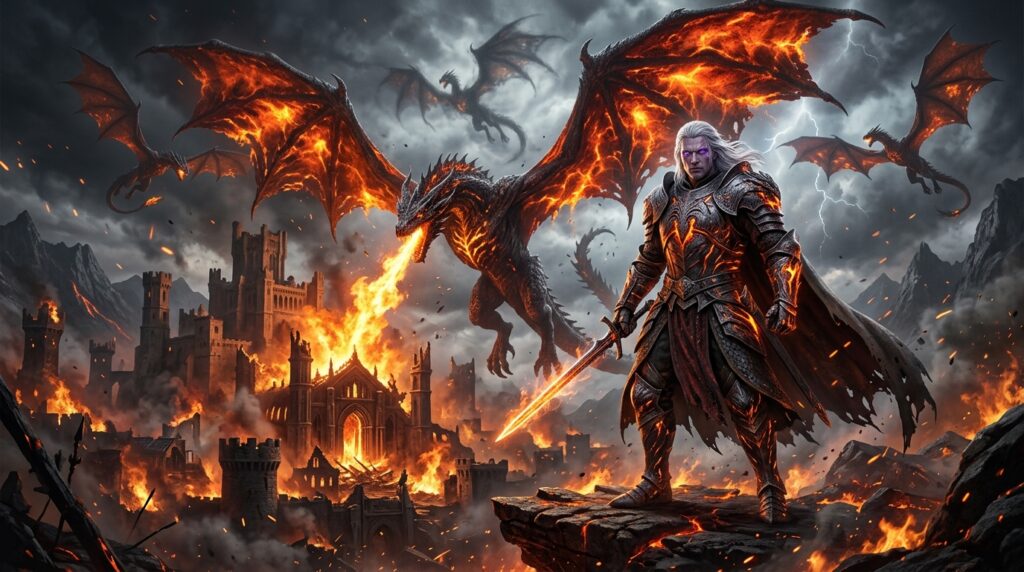
When characters speak of “the blood of the dragon,” it is primarily metaphorical. It refers to Targaryen heritage: their fiery temperament, silver-gold hair, violet eyes, and supposed resistance to heat. Daenerys famously declares herself “the blood of the dragon” while surviving a funeral pyre and hatching her eggs.
Yet lore hints at something more literal. Ancient Valyrian bloodmages may have infused dragon essence into their own bloodlines, creating a symbiotic or genetic bond. This would explain deformed “dragon babies”—stillborn Targaryen infants with scales, wings, or other monstrous traits—as failed experiments or echoes of that ancient tampering.
The practice of keeping the bloodline “pure” through sibling marriages helped maintain this trait, though it carried risks of madness (the infamous “Targaryen madness”). In House of the Dragon, we see the tension during the Dance of the Dragons as dragonseeds (bastards with partial Valyrian blood) attempt to claim mounts, often with fatal results.
Nettles in the books complicates the picture: she bonds with the wild dragon Sheepstealer through patience and offerings rather than blood alone. This suggests the bond isn’t exclusively genetic, but “dragon blood” remains the traditional and most reliable path—steeped in magic and danger.
Key Moments Involving Dragon Blood Across the Saga
- Daenerys’ Pyre (Game of Thrones Season 1): Daenerys walks into flames with Drogo’s body and dragon eggs. The ritual—fueled by blood magic, sacrifice, and fire—hatches her three dragons. A red comet appears, signaling magic’s return. Three deaths pay for three lives, echoing blood magic principles.
- Mirri Maz Duur’s Ritual: The maegi uses blood sorcery on Drogo, twisting life and death. It costs Daenerys her unborn son and highlights the perilous exchange inherent in such magic.
- Battle of Rook’s Rest (House of the Dragon Season 2): Sunfyre’s boiling blood rains down, burning Green soldiers. The scene visually drives home that dragons are weapons even when bleeding out. Vhagar’s involvement adds layers of betrayal and kin-slaying.
- Forging and Power: Valyrian steel’s rarity ties back to lost knowledge of dragon blood rituals. Wildfire, used by the Mad King, may mimic or derive from dragon-like properties.
These moments show dragon blood as both a source of wonder and a harbinger of destruction. It empowers conquest but demands sacrifice, often turning inward on the Targaryens themselves.
Implications for the Wider Story: Power, Madness, and the Long Night
Dragon blood magic embodies the series’ core warning: power always exacts a price. The Valyrians built an empire on dragons and sorcery but likely doomed themselves through hubris—the Doom of Valyria may have been punishment for their blood rituals and flesh experiments.
In the main timeline, Daenerys revives dragons through blood and fire, becoming a conqueror. Yet her dragons bring both liberation and devastation. The Dance of the Dragons in House of the Dragon illustrates how this power fractures families and nearly extinguishes the beasts.
Thematically, dragon blood contrasts with the icy threat of the White Walkers. Fire and blood represent chaotic, passionate power; ice represents deathly order. The prophecy of the Prince That Was Promised (or Azor Ahai) ties into this duality, with “lightbringer” possibly forged in blood and fire.
For modern audiences in 2026, as House of the Dragon continues, dragon blood remains a rich vein for exploration. Future seasons may delve deeper into blood rituals, dragon claims, or even attempts to recreate lost Valyrian arts.
Why Dragon Blood Endures as Compelling Lore
Dragon blood in Game of Thrones is more than a cool visual or plot device. It grounds the fantasy in tangible horror—scalding sprays, smoking wounds, and the constant reminder that dragons are not pets but living cataclysms. It explains Targaryen exceptionalism while humanizing their flaws: their “fire” brings glory and madness alike.
Ultimately, dragon blood reminds us that in Westeros, nothing is free. To wield fire, one must embrace blood. The Targaryens took what they wanted with fire and blood, but the price echoed through generations—from the Conquest to the Dance to Daenerys’ campaign.
Whether literal magical fluid or symbolic heritage, dragon blood flows at the heart of the saga. It steams with potential and danger, much like the dragons themselves. In a world of ice and fire, it burns brightest—and most destructively.
As the story unfolds, one truth holds: the blood of the dragon is never just blood. It is power incarnate, demanding reverence, fear, and sacrifice in equal measure.
Frequently Asked Questions (FAQs)
1. What is dragon blood in Game of Thrones?
It refers mainly to the Targaryen lineage and their connection to dragons and ancient Valyrian magic.
2. Why is dragon blood important?
It symbolizes power, legitimacy, and the ability to bond with dragons.
3. Who has dragon blood in the series?
Primarily the Targaryen family, including Daenerys and Jon Snow.
4. Can all Targaryens control dragons?
Not all, but many have a strong connection due to their bloodline.
5. Why did Daenerys survive fire?
It is linked to her dragon blood and symbolic rebirth.
6. Is dragon blood magical or genetic?
It is a mix of both mythology and inherited traits in the story.
7. Does dragon blood cause madness?
Not directly, but power often leads to instability in Targaryens.
8. What do dragons represent?
They represent power, destruction, and authority.
9. Is Jon Snow a dragon blood heir?
Yes, he is revealed to be a Targaryen by birth.
10. What is the main message of dragon blood?
Power comes with a heavy price and can destroy those who cannot control it.
Conclusion
Dragon blood in Game of Thrones is far more than a biological trait. It is a symbol of fire, power, legacy, and destruction. It defines the Targaryens and shapes the fate of Westeros through their rise and fall. While it grants immense strength and connection to dragons, it also demands a heavy price in the form of sacrifice, madness, and loss.
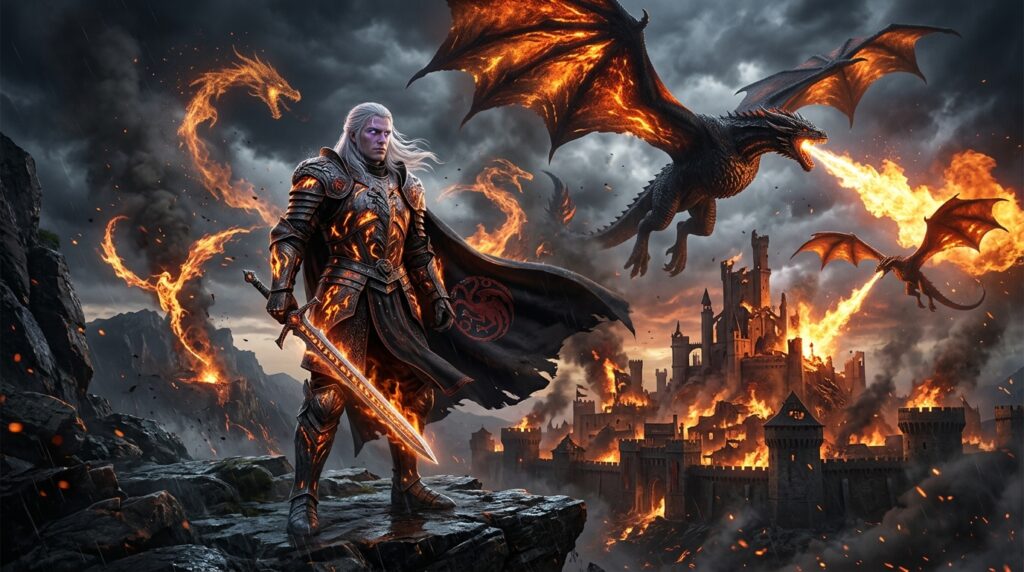
Ultimately, dragon blood represents a central truth of the series: power is never free. It always comes with consequences, and those who wield it must decide whether they will be consumed by it or master it.