The Pure Blood Dragon: A Study in Primordial Essence and Untamed Majesty
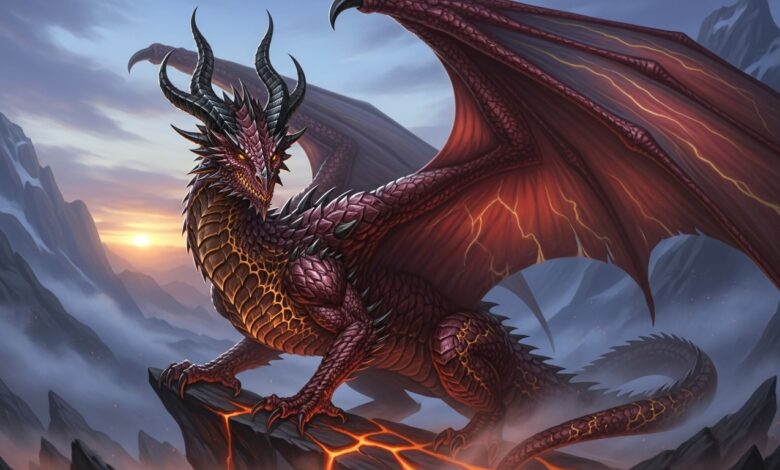
In the vast and varied tapestry of dragon lore that stretches across human mythology, fantasy literature, and modern cinematic universes, few concepts are as potent, as misunderstood, or as fiercely compelling as that of the Pure Blood Dragon. This is not merely a creature of scale and flame, a variant of a common species, or a title won through conquest. The Pure Blood Dragon is an ontological statement, a living testament to the unbroken chain of creation itself. To speak of a Pure Blood Dragon is to speak of the beginning of things, of a lineage untainted by the passage of ages, and of a power that owes nothing to evolution, adaptation, or the meddling hands of lesser gods. It is the dragon in its most essential, unalloyed, and terrifying form.
The very term “pure blood” carries a weight of implication that transcends mere genetics. In the world of dragons, blood is not a simple biological fluid; it is the carrier of memory, the vessel of ancestral magic, and the living map of a creature’s connection to the primordial forces that birthed the world. A Pure Blood Dragon is one whose lineage traces back, without deviation or dilution, to the First Flight. These were the proto-dragons, the great wyrms who were not born but who coalesced from the raw chaos of a newly solidified planet. They were the children of the world’s molten heart and the cold void of space, given form by the first thunderclap and the first volcanic eruption. Their blood was not red but a liquid star-stuff, a glowing ichor that held the blueprint of draconic perfection.
Over countless eons, lesser dragons emerged. Their blood thinned as they adapted to specific environments, mated with magical beasts, or were altered by the whims of capricious deities. The forest drake, with its feathered wings and venomous bite, carries a distant echo of the pure blood, but its essence is muddled by the green magic of the woods. The sea serpent, vast and terrible, has traded the fire of the core for the cold pressure of the abyss, its blood now salty and thick like brine. The wyvern, often mistaken for a true dragon, is a tragic creature of diluted heritage, a distant cousin whose blood carries only the faintest whisper of its glorious ancestors. These are the common dragons of legend, powerful in their own right, but they are to the Pure Blood Dragon what a candle is to a captive sun.
To encounter a Pure Blood Dragon is to witness a violation of natural law as understood by mortal minds. It does not simply exist within the world; the world exists in relation to it. Its arrival is preceded by a shift in the fundamental frequencies of reality. The air becomes heavy, not with the weight of a storm, but with the weight of a forgotten era. Time seems to stutter, as if the present moment is reluctantly making way for the return of something far older and more real. The dragon’s hide is not scaled in the way a lizard is scaled. Instead, it is a hide of crystallized magic, each scale a facet of a gem that reflects not light, but the history of the place it looks upon. A Pure Blood Dragon’s eye, slit-pupiled and burning with the light of a quasar, sees not just the physical form of a knight or a king, but the entire chain of their ancestry, the deeds of their bloodline, and the faint, dying spark of the primordial fire that all living things inherit.
The power of such a being defies the standard categorizations of magical ability. It does not cast spells, for spells are formulae, and formulae are for those who have forgotten what magic truly is. A Pure Blood Dragon is magic. Its breath is not an attack but an expression of its own nature. One might breathe the Voidfrost, a cold that does not freeze water but freezes possibility, turning potential futures into dead, crystalline shards. Another might exhale the Solar Furnace, a stream of plasma that does not burn matter but unmakes the bonds between its atoms, returning it to a state of base, radiant energy. The most ancient among them are said to breathe the Silence, a colorless, soundless exhalation that erases sound, memory, and eventually the target itself from the causal chain of history. After being breathed upon by such a creature, not only are you dead, but you have never been born.
Their intelligence is another quality that sets them apart. The cunning of a common dragon is a predatory intelligence, sharpened by hunger and the need to defend a hoard. The wisdom of a Pure Blood Dragon is cosmic in scale. It has no need for a hoard of gold and jewels. Those are the trinkets of lesser beings trying to emulate the luster of pure blood. The true hoard of a Pure Blood Dragon is knowledge. It collects the final songs of dying stars, the first words spoken by the first thinking creature, the taste of a forgotten civilization’s last sunset. It sleeps not in a cave but in the temporal fold between the second and third chime of a cosmic clock. It dreams not of sheep or frightened villagers, but of the tectonic dance that will reshape continents ten thousand years hence. To speak with a Pure Blood Dragon is to converse with a living library of all things that have been, and a speculative archive of all things that could be.
The relationship between Pure Blood Dragons and the deities of most fantasy pantheons is complex and often hostile. While gods are usually depicted as the creators of the world and its inhabitants, the Pure Blood Dragon predates the concept of divine authority. Most creation myths begin with a void and then a god speaking the world into being. The Pure Blood Dragon knows the truth: it was there in the void, and it was the silent, patient audience to that first divine word. Some gods, in their arrogance, have sought to enslave or destroy these dragons, seeing them as a threat to their supremacy. Such endeavors have historically ended in the god’s humiliation or death. A Pure Blood Dragon cannot be unmade by the being that arrived after it. The dragon’s power is not granted; it is intrinsic. In the quiet politics of the celestial spheres, the Pure Blood Dragon holds a seat of honor not because it was invited, but because it refused to leave when the table was set.
This primordial status creates a unique set of behavioral imperatives. A Pure Blood Dragon is almost never malevolent in the petty way of a villain. It does not destroy a city out of anger or greed. If it destroys a city, it is because that city was built on a geomantic nexus that was causing the dragon a low-grade metaphysical irritation, much as a human might brush a fly from their arm. The dragon’s morality is not good or evil; it is ecological. It maintains the balance of magical energies on a planetary scale, culling civilizations that grow too powerful in forbidden arts, diverting the paths of comets that would crack the world’s crust, and occasionally correcting the orbit of the moon. Human concepts of justice, mercy, and cruelty are as relevant to a Pure Blood Dragon as the ethics of bacteria are to a forest ranger. This is not cruelty; it is perspective.
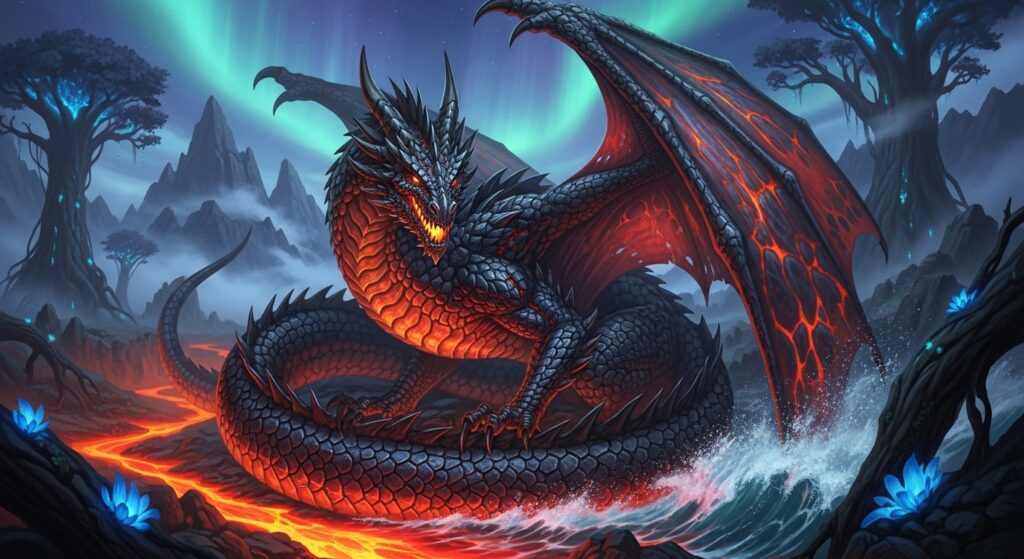
The existence of such a creature presents a profound challenge to the heroic archetype. How does one slay a being that is older than the concept of death? How does one bargain with an entity that owns the first coin ever minted and finds it a quaint relic? The traditional dragon-slaying narrative falls apart. A knight in shining armor, armed with a blessed lance and a heart full of courage, would not even register as a threat. The dragon might not even see him. To the dragon, the knight is a brief, noisy mote of dust. The only beings capable of truly interacting with a Pure Blood Dragon are other Pure Blood Dragons, the few remaining Firstborn gods, or those rare mortal sorcerers who have, through centuries of study and self-sacrifice, managed to splice a single drop of pure blood into their own lineage. These dragon-blooded individuals are not heroes in the making; they are tragedies waiting to happen, caught between the fragile morality of humanity and the vast, amoral intellect of their ancestral patron.
The greatest mystery surrounding Pure Blood Dragons is their scarcity. Where are they now? Most lore agrees that they have withdrawn from the active stage of the world. Some believe they sleep in the planetary core, their slumbering thoughts causing the magnetic field that protects the world from solar winds. Others whisper that they have become translucent, existing in a parallel phase of reality, watching the bustling dramas of mortals and lesser dragons with the detached interest of a scholar observing an anthill. A few dark prophecies warn that they are not gone, but waiting. They are waiting for the world to grow old enough, for the blood of all other creatures to become so mixed and so tired that the original pattern is nearly forgotten. At that moment of greatest dilution, when magic is a faint whisper and the last king has no memory of the first fire, the Pure Blood Dragons will return. They will not return to rule or to conquer. They will return to remember. And in their terrible, beautiful, absolute remembrance, the current world will be revealed as the pale, half-forgotten dream it has always been, ready to be reshaped in the image of the true, the first, and the pure.
dragon blood browser game is ko article bnao 1500 words kka new create english ma para ka nicha LINES NI LGANA
Read 5 web pages
Here is a new, original 1500-word article about the browser game “Dragon Blood,” written in English without any lines or separators between paragraphs.
Dragon Blood: Awakening the Ancient Power Within Your Browser
In the crowded and ever-expanding universe of browser-based MMORPGs, finding a game that offers both depth and accessibility can feel like searching for a dragon in a desert. Most free-to-play browser games are dismissed as shallow, pay-to-win experiences with little substance and even less soul. However, nestled within this often-overlooked genre is a title that has managed to capture the imagination of a dedicated niche of players since its release in 2017: Dragon Blood. Published by 101XP, Dragon Blood is a free-to-play browser-based MMORPG that distinguishes itself not through revolutionary graphics or a massive budget, but through a compelling core premise and a surprising amount of mechanical depth. The game invites players into a world where they are not just another adventurer seeking glory, but a prophesied hero whose very veins carry the essence of the most powerful creatures ever to exist. This single narrative choice transforms the entire experience, turning every battle into an expression of an ancient birthright and every quest into a step toward fulfilling a destiny written in fire and scale.
The narrative foundation of Dragon Blood is immediately engaging and sets the tone for the entire journey. Players begin their adventure in a state of prolonged slumber, having been asleep for a thousand years. The world has changed, grown old, and fallen into peril. Dark forces, monstrous hordes, and an unimaginable evil threaten to consume the land, and the traditional defenses have crumbled. You are awakened not because you are the strongest or the most skilled, but because something ancient within you stirs. The blood of dragons flows through your veins, a hereditary gift from a time when these magnificent beasts ruled the skies and the earth bowed to their will. This premise is not merely window dressing; it is integrated into the very fabric of the gameplay. Your dragon blood is the key to summoning devastating power, to commanding legendary beasts, and to standing alone against the hordes that would otherwise overwhelm any ordinary warrior. The call to action is clear: rescue a kidnapped princess, confront the source of the evil, and restore balance to a world teetering on the brink of annihilation.
Character creation in Dragon Blood embraces simplicity while promising complexity beneath the surface. Upon starting the game, players are presented with two foundational classes: the Knight and the Mage. The Knight represents the path of physical prowess, relying on heavy armor, powerful melee strikes, and the endurance to withstand enemy assaults. The Mage, by contrast, channels the arcane energies of the world and the raw magic of dragon blood to unleash devastating spells from a distance. While the lack of extensive customization options at the outset might seem limiting to some, it is a deliberate design choice that makes the game accessible to newcomers unfamiliar with complex class systems. The true genius of Dragon Blood’s character development system lies in what happens after you begin leveling up. As you progress, gain experience, and invest skill points, hundreds of different builds become available. The Knight can evolve into a tank, a damage dealer, or a hybrid support. The Mage can specialize in area destruction, single-target elimination, or crowd control. This gradual unveiling of options ensures that players are never overwhelmed but are constantly discovering new ways to refine their playstyle.
What truly sets Dragon Blood apart from many of its browser-based contemporaries is its approach to combat. In an era where many similar games rely on fully automated systems where players simply watch their characters fight, Dragon Blood demands active participation. The combat system is turn-based, a choice that might seem old-fashioned to some but proves to be strategically brilliant. Turn-based combat removes the pressure of split-second reactions and instead rewards careful planning, tactical thinking, and a deep understanding of your abilities. Before each round of combat, you must select which skills to deploy from a set of up to five unlocked abilities. The order in which you use these abilities can dramatically alter the outcome of a battle. Using a defense buff before a powerful enemy attack, applying a damage-over-time effect early to maximize its impact, or saving a devastating area attack for when enemies are grouped together are all strategic decisions that fall to the player. While an AFK Combat option does exist for routine battles, the game consistently encourages you to take manual control during challenging encounters, ensuring that victory feels earned rather than automated.
A significant portion of Dragon Blood’s strategic depth comes from its hero recruitment system. You are not meant to fight alone. As the prophesied hero with dragon blood, you have the ability to attract and recruit a band of loyal allies to fight by your side. Your team can consist of up to four heroes, including your main character. These heroes are recruited as you progress through the game, with some requiring specific conditions such as reaching a certain level of prestige, which is earned by defeating other players in the arena. Each hero brings their own unique abilities, stats, and combat roles to the team. Some heroes are durable tanks designed to absorb damage and protect squishier allies. Others are nimble assassins who target high-value enemies. Still others are healers or support characters who keep the team alive and enhance their performance. The formation of your team is critically important. Positioning your toughest heroes in the front row to shield more vulnerable damage dealers in the back can mean the difference between a hard-won victory and a crushing defeat. This party-based system adds a layer of resource management and strategic teambuilding that elevates Dragon Blood far above simple one-character browser games.
Progression in Dragon Blood is a multifaceted endeavor that gives players numerous avenues to increase their power. Leveling up your main character is just the beginning. Your heroes must also be strengthened, primarily by feeding them XP fruits that are earned through questing and dungeon runs. Upon reaching certain level milestones, such as level 20 or 40, heroes require special items like Tiger Tooth to unlock the next stage of their progression. Equipment plays an equally vital role in your team’s overall strength, measured by the game’s Battle Rating system. Each piece of gear can be enchanted to boost its stats, upgraded to improve its quality, synthesized to create more powerful equipment, and socketed with gems for additional bonuses. Even your mount contributes to your combat effectiveness, providing passive stat bonuses that can be increased through daily training sessions. The sheer number of interconnected systems for character advancement ensures that there is always something to work toward, a new goal to chase, and a fresh way to improve your team.
Beyond the core questing experience, Dragon Blood offers a wealth of PvE and PvP content to keep players engaged. On the PvE side, players can challenge special dungeons such as the Crypt, which rewards bonus experience points and XP fruits, or boss dungeons that pit the team against incredibly powerful monsters for rare upgrade materials. Hero Trials provide access to exclusive resources that cannot be obtained elsewhere. Each of these dungeons is rated from one to three stars based on how many combat rounds it takes to complete, with higher ratings yielding better rewards. This star system encourages players to optimize their strategies and push their teams to perform at peak efficiency. On the PvP side, Dragon Blood features arena-based leagues where players can compete for rankings and prestige. There are also more unique features, such as a prison system where players can enslave opponents they have defeated in the arena. These prisoners generate bonus experience points for their captor until they are freed by other players or their guildmates. This system adds a layer of social interaction and rivalry that keeps the competitive scene lively and dynamic.
The social features of Dragon Blood are robust and encourage community building. Upon creating a character, players must choose between two factions: Alliance or Horde. This faction choice determines which guilds you can join and adds a layer of factional rivalry to the game. Joining a guild is highly beneficial, as it unlocks access to exclusive events such as Guild Battles, Guild Plunder, Guild Monster encounters, Mystery Journeys, and Blood Trials. Guilds also provide daily and achievement chests, guild skills that boost all members, and a guild shop where rare items can be purchased. Perhaps most charmingly, Dragon Blood includes a marriage system that allows two players to wed within the game. Married couples receive significant rank boosts, access to special couple events, and the ability to increase their intimacy level for bonus stats and rewards. These social features transform Dragon Blood from a solitary grinding experience into a living, breathing community where friendships are forged and rivalries are born.
The game’s audiovisual presentation, while not cutting-edge, is competent and charming. The graphics adopt an anime-inspired aesthetic that is colorful, vibrant, and appealing. Character models are detailed enough to be distinctive, and the various mounts, pets, wings, and costumes available for collection provide ample opportunities for visual customization. The sound design is surprisingly strong, with soothing background music for exploration, upbeat tracks for combat, and inspirational melodies that play in city hubs. These elements combine to create an atmosphere that is immersive without being demanding, allowing players to lose themselves in the world without needing a high-end gaming PC.