Dota 2: Dragon’s Blood – The Animated Revolution That Bridged Gaming and Epic Fantasy
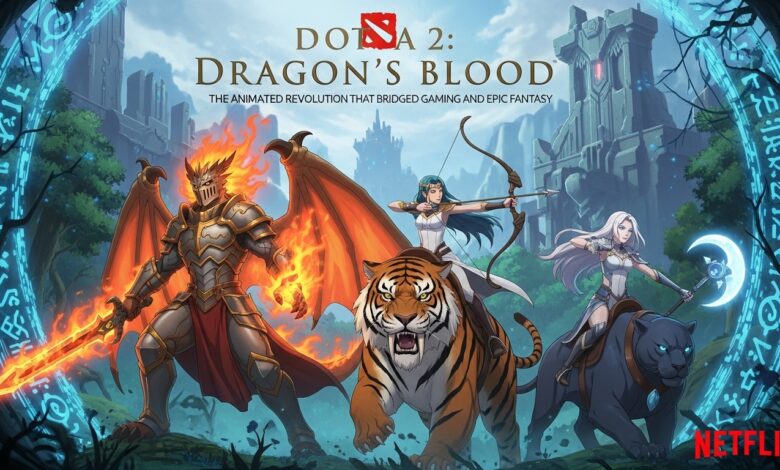
When Gaming Legends Take Flight
In the annals of video game history, few moments match the significance of March 25, 2021. On this date, Netflix premiered Dota 2: Dragon’s Blood, an animated series that fundamentally transformed how the world perceived competitive gaming narratives. This wasn’t merely marketing content for Valve’s legendary MOBA—it was a bold declaration that complex, mechanics-driven games could spawn emotionally resonant, visually spectacular storytelling accessible to millions worldwide.
Created through an unprecedented collaboration between Hollywood screenwriting talent, South Korean animation excellence, and gaming industry visionaries, Dota 2: Dragon’s Blood accomplished what countless adaptations had attempted and failed: it honored its source material while creating legitimate artistic merit that stood independently from the game.
The Genesis: From Battle Arena to Narrative Epic
Dota 2, Valve’s premier multiplayer online battle arena, had built its reputation on competitive depth rather than storytelling. For a decade, millions of players engaged with heroes like Dragon Knight, Invoker, and Mirana through gameplay mechanics—last-hitting creeps, executing combos, coordinating team fights—without understanding the interconnected lore binding these characters together. The game’s narrative existed fragmented across hero biographies, item flavor text, and environmental details, rich in mythology but inaccessible to casual engagement.
Showrunner Ashley Edward Miller recognized extraordinary potential in this untapped lore. With writing credits including X-Men: First Class, Thor, and Black Sails, Miller understood how to extract human drama from fantastic premises. He partnered with Studio Mir, the South Korean animation house renowned for The Legend of Korra and Voltron: Legendary Defender, to create visual storytelling that matched the game’s epic scope.
The result was Book One: eight episodes that introduced viewers to Davion, a dragon-slaying knight whose soul merges with the ancient dragon Slyrak during a battle against the demon Terrorblade. This fusion grants extraordinary power while threatening Davion’s humanity, creating internal conflict that drives the narrative. Alongside Princess Mirana of the Moon and her loyal bodyguard Marci, Davion discovers that Terrorblade seeks to collect all Eldwurm souls to remake reality—a cosmic threat requiring heroes to embrace their darkest potential.
Visual Mastery: Animation as High Art
Studio Mir’s contribution cannot be overstated. The animation studio delivered work that critics consistently described as “cinematic,” “breathtaking,” and “next-level”—terms rarely applied to streaming television, let alone video game adaptations. Their approach blended anime influences with Western animation sensibilities, creating a distinctive aesthetic that served the fantasy genre perfectly.
Action sequences demonstrated particular excellence. Dragon battles unfolded with scale and ferocity that theatrical releases would envy. The Invoker’s magical displays transformed simple game mechanics into spectacular visual phenomena—glowing runes, reality distortion, cosmic manipulation rendered with fluid grace. Character designs balanced recognizability for Dota 2 veterans with accessibility for newcomers, ensuring that Davion’s evolving armor and draconic features communicated character development visually.
The series embraced mature content without exploitation. Combat featured genuine stakes—characters died, suffered, and sacrificed. This adult orientation respected both the source material’s intensity and audience intelligence, distinguishing Dota 2: Dragon’s Blood from child-oriented animation that dominates much of the medium.
Character Complexity: Heroes with Humanity
The series’ greatest achievement lay in character development. Dota 2’s heroes, designed primarily for mechanical diversity, became fully realized individuals with motivations, flaws, and growth arcs.
Davion evolved from simple dragon slayer to tragic figure wrestling with literal inner demons. His relationship with Slyrak wasn’t merely power acquisition—it was identity negotiation, asking whether humanity could survive fusion with ancient primordial force.
Mirana transcended “princess in distress” tropes to become a leader confronting impossible choices. Her journey from royal privilege to cosmic responsibility mirrored classic hero’s journey structures while maintaining contemporary relevance.
Marci, the silent bodyguard, communicated volumes through expression and action rather than dialogue. Her loyalty to Mirana, expressed through combat excellence and emotional support, created one of animation’s most compelling relationships—remarkable for a character who never spoke a word.
The Invoker, voiced with mesmerizing precision by Troy Baker, emerged as the series’ most complex figure. This mage of unimaginable power manipulated events from behind the scenes, his motivations cryptic until devastating revelation. Baker’s performance made every utterance feel significant, creating a character simultaneously sympathetic and terrifying.
Terrorblade served as antagonist not through simple evil, but through philosophical opposition—he sought to remake reality because he believed creation required destruction, that new beginnings demanded catastrophic endings.
The Reverse Adaptation: From Screen to Battlefield
Perhaps the series’ most significant industry impact occurred not on Netflix, but within Dota 2 itself. In an unprecedented example of transmedia synergy, Valve announced at The International 2021 that Marci would become a playable hero in the original game.
This reverse adaptation validated Dota 2: Dragon’s Blood as canonical expansion rather than licensed spin-off. Marci officially joined the game’s roster on October 28, 2021, bringing her unique hand-to-hand combat style from animation to interactive gameplay. The announcement, delivered through Studio Mir animation, delighted the Dota community and demonstrated that the series had earned genuine creative influence over its source material.
This integration extended beyond character addition. Locations, items, and concepts from the series became referenced in game updates, creating feedback loops where the animated narrative enriched the playing experience. Players who watched the series discovered new appreciation for heroes they had played for years; viewers who tried the game found familiar faces awaiting them.
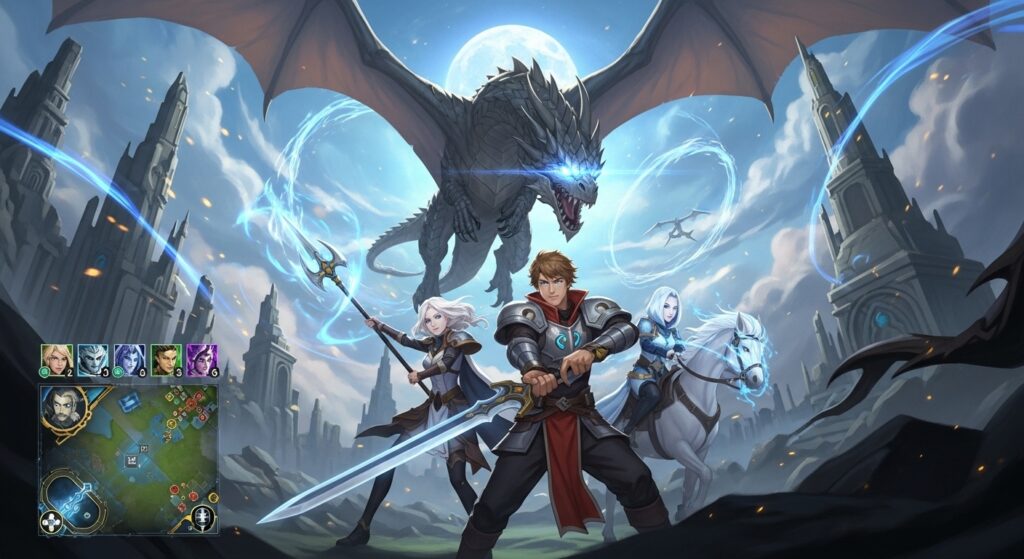
A Trilogy of Escalation
Netflix’s commitment to the series manifested through three complete seasons:
Book One (March 25, 2021) established foundations—Davion’s transformation, Mirana’s mission, Terrorblade’s apocalyptic threat. Eight episodes introduced primary cast, world mythology, and central conflict between preservation and destruction.
Book Two (January 18, 2022) deepened political intrigue as Mirana returned to the Helio Imperium, confronting family legacy and leadership responsibility. New threats emerged, alliances shifted, and the cosmic stakes became increasingly personal.
Book Three (August 11, 2022) brought definitive conclusion across eight final episodes. The Terrorblade conflict resolved, the Invoker’s true motivations revealed, and Davion’s ultimate fate as both man and dragon determined. The finale, “Consider Phlebas,” posed philosophical questions about sacrifice and creation that resonated long after credits rolled.
This trilogy structure allowed genuine character evolution impossible in standalone films or shorter seasons. Relationships developed naturally; power progression felt earned; emotional beats landed with accumulated weight. The complete narrative transformed Davion from simple warrior to mythological figure, while Mirana’s journey from princess to goddess reflected universal themes of growth and responsibility.
Critical Recognition and Cultural Impact
The series achieved impressive validation across review platforms. Rotten Tomatoes reported 75% approval based on critic reviews, with consensus noting that “while knowledge of the game isn’t necessary, it might have been nice if Dota: Dragon’s Blood had translated more of its narrative prowess to the small screen”—acknowledging accessibility while critiquing minor pacing issues.
More significantly, the series influenced industry perceptions about gaming content. Following its success, Netflix dramatically expanded gaming-related programming. Competitors developed similar animated adaptations. The series proved that “prestige animation” could emerge from unexpected sources, that competitive gaming properties could support narrative storytelling, and that international collaboration could create culturally resonant entertainment.
For Dota 2 specifically, the series revitalized interest in the game’s lore. Characters like the Invoker, previously known primarily for mechanical complexity, gained emotional depth. Locations such as the Nightsilver Woods and Temple of Mene transformed from background art into meaningful settings with history and significance.
Themes of Power, Faith, and Sacrifice
Beneath fantasy spectacle, Dota 2: Dragon’s Blood explored profound contemporary themes. The series interrogated heroism’s nature—whether Davion’s dragon-slaying represented noble service or genocidal prejudice. It examined religious devotion through Luna’s fanaticism and Fymryn’s apostasy, questioning whether faith liberates or imprisons. It considered leadership through Mirana’s reluctant rise to power, asking whether authority could be wielded without corruption.
Most significantly, the series contemplated creation’s cost. Terrorblade sought to remake reality; the Invoker manipulated events to resurrect his daughter; Davion and Mirana struggled to preserve existence itself. The finale explicitly asked whether saving the world required destroying it first—whether new beginnings demanded catastrophic endings. These philosophical inquiries elevated the series beyond typical animated adventure into genuine speculative fiction.
Legacy: The Dragon Still Flies
As the complete trilogy streams on Netflix, Dota 2: Dragon’s Blood stands as definitive proof that video game adaptations can achieve artistic excellence. It transformed a multiplayer battle arena into Shakespearean fantasy, gave depth to previously one-dimensional characters, influenced its source game’s ongoing evolution, and demonstrated that streaming platforms could support ambitious, adult-oriented animation.
For gaming enthusiasts, it validated their passion by treating source material with genuine respect. For animation fans, it provided visual spectacle rivaling theatrical releases. For storytellers, it offered a template for adaptation that honored origins while creating independently valuable art.
The dragon’s blood still flows—through Davion’s veins, through Netflix’s servers, through the continued evolution of the Dota universe. This animated epic reminds us that legends never truly end; they simply await new champions to awaken them.