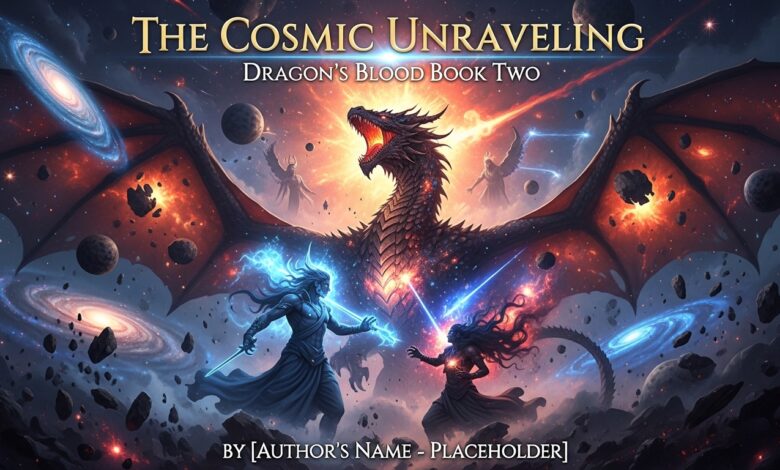
The release of Dragon’s Blood Book Two in January 2022 marked a pivotal moment for the animated series that had already established itself as one of the most ambitious video game adaptations in recent memory. Following the foundation laid by the first season this eight-episode continuation elevated the stakes from personal transformation and political intrigue to cosmic warfare and existential threat. Studio Mir returned with even more spectacular animation while Ashley Edward Miller’s writing expanded the mythology of the DOTA universe into dimensions previously only hinted at in the source material. The result delivered a darker more complex narrative that tested its characters against forces beyond mortal comprehension while maintaining the emotional intimacy that had distinguished the series premiere.
Book Two opens in the immediate aftermath of the first season’s climactic events with Davion struggling to maintain control over his dual nature as both Dragon Knight and vessel for the Eldwurm Slyrak. The possession that began as an uneasy alliance has evolved into something more dangerous as Slyrak’s consciousness asserts greater influence over their shared existence. This internal conflict manifests externally through terrifying transformations where Davion’s human form gives way to draconic fury threatening everyone around him. The psychological horror of losing oneself to an ancient alien intelligence provides the season’s emotional anchor grounding cosmic events in relatable human fear. Yuri Lowenthal’s voice performance captures this struggle with remarkable nuance conveying both Davion’s determination and his growing desperation as control slips away.
The narrative architecture of Book Two expands significantly introducing multiple storylines that eventually converge in spectacular fashion. While Davion’s condition worsens Princess Mirana continues her quest to recover the stolen lotuses that represent her kingdom’s spiritual foundation. This mission leads her into alliance with unexpected companions including the mysterious elf Filomena whose knowledge of cosmic secrets proves invaluable. Meanwhile the Invoker pursues his own agenda involving the summoning of Selemene the Dark Moon Goddess whose relationship with him encompasses both love and terrible betrayal. These parallel narratives allow the season to explore different facets of the world while building toward reunions and confrontations that carry the weight of established relationships and accumulated history.
The Terrorblade emerges as the primary antagonist for Book Two though his role extends far beyond simple villainy. This demon of the Foulfell dimension seeks to collect the souls of the Eldwurms granting him power to reshape reality according to his desires. His motivation stems from a twisted desire to create a perfect world by eliminating the suffering and imperfection that define mortal existence. This philosophical ambition elevates him above typical fantasy antagonists suggesting that his apocalyptic vision represents a dark mirror of legitimate desires for order and peace. The Terrorblade’s manipulations drive much of the season’s plot as he exploits the divisions between gods dragons and mortals to advance his cosmic agenda. His presence forces every character to confront what they would sacrifice to prevent his vision from becoming reality.
The mythology of the Eldwurms receives extensive development in Book Two transforming these ancient dragons from background elements into central figures whose fates determine the survival of reality itself. Each Eldwurm embodies a fundamental force of creation with Slyrak representing fire Byssrak commanding void and others governing time earth and other elemental principles. The season reveals that these beings exist beyond simple biological classification functioning as cosmic constants that maintain the balance of existence. Their vulnerability to the Terrorblade’s schemes demonstrates that even fundamental forces face threats from dimensions outside normal reality. The relationships between the Eldwurms prove as complex as any human alliance with ancient grudges and unexpected loyalties influencing their responses to crisis.
The character of Fymryn undergoes significant evolution in Book Two transitioning from antagonist to reluctant ally as she confronts the consequences of her actions. Her theft of the lotuses in the first season set events in motion that now threaten everything she sought to protect. This arc explores themes of redemption and responsibility as she works to undo damage that cannot be fully repaired. Her connection to Mene a forgotten goddess whose power Selemene usurped adds religious and political dimensions to her personal journey. The season uses Fymryn’s perspective to critique the nature of divinity and worship suggesting that gods maintain power through narrative control as much as through actual benevolence.
The visual presentation of Book Two surpasses the already impressive standards established by the first season. Studio Mir’s animation reaches new heights in sequences depicting dimensional travel cosmic battles and dragon transformations. The Foulfell dimension particularly stands out as a nightmare realm of crystalline structures and distorted physics providing a stark contrast to the natural environments of the material plane. The design of the Terrorblade balances demonic menace with tragic nobility suggesting the angelic being he might have been before his fall. Action sequences demonstrate increased confidence in long takes and complex choreography particularly in a mid-season battle that traverses multiple planes of existence while maintaining geographical coherence. The color palette shifts toward darker tones reflecting the season’s more somber themes while preserving the vibrant highlights that distinguish key characters and magical effects.
The relationship between Davion and Mirana deepens considerably in Book Two moving from professional respect to genuine emotional intimacy. Their separation for much of the season creates longing that pays off in their eventual reunion where shared experiences have changed both fundamentally. Mirana’s growth as a leader who must make impossible choices parallels Davion’s struggle to maintain humanity against overwhelming power. Their connection provides the season’s emotional core ensuring that cosmic events carry personal stakes. The writing avoids romantic clichés instead building a partnership based on mutual understanding of burden and sacrifice. This relationship anchors the fantastical elements in recognizable human experience making the impossible struggles feel emotionally authentic.
The Invoker’s backstory receives extensive exploration through flashbacks that reveal the tragedy driving his present actions. His love for Selemene and their daughter Filomena explains his willingness to manipulate gods and demons alike in pursuit of reunion. This narrative choice transforms him from mysterious antagonist to sympathetic figure whose methods may be monstrous but whose motivations remain comprehensibly human. The revelation of his true name and history connects to broader themes of identity and memory that run throughout the season. His confrontation with Selemene carries the weight of ancient betrayal and lost love elevating their conflict beyond simple opposition into tragedy.
The season’s climax brings multiple storylines together in a confrontation that redefines the power dynamics of the entire series. The Terrorblade’s assault on the Eldwurms forces alliances between former enemies as the survival of reality itself hangs in the balance. Davion must make an impossible choice regarding his connection to Slyrak that will determine whether he remains human or becomes something else entirely. These resolutions avoid easy answers leaving characters damaged and transformed by their experiences rather than simply victorious. The final episodes establish new status quos that promise further evolution while providing sufficient closure to satisfy viewers if the series had concluded here.
The thematic concerns of Book Two extend beyond individual character arcs into explorations of fate free will and the nature of divinity. The series questions whether gods deserve worship or merely demand it through power and narrative control. Characters repeatedly face choices between personal desire and cosmic responsibility with no guarantee that sacrifice will be rewarded. The Terrorblade’s vision of perfect order through destruction challenges viewers to consider whether peace justifies any cost. These philosophical underpinnings elevate the season above simple adventure into genuine speculative fiction that uses fantasy elements to examine timeless questions.
The reception of Book Two confirmed that the series had successfully transcended its video game origins to attract viewers with no prior DOTA experience. Critics praised the expanded scope and emotional depth while noting the increased complexity that demanded careful attention. The darker tone polarized some viewers who preferred the first season’s more straightforward adventure narrative but most appreciated the willingness to take creative risks. The season’s conclusion generated significant discussion about the future direction of the series with cliffhangers and unresolved threads promising further developments.
The influence of Book Two on animated fantasy storytelling extends through its demonstration that serialized animation can handle complex mythologies and mature themes. Its success alongside contemporaneous series established that adult viewers would engage with animated content given appropriate narrative sophistication. The international production model combining American writing with Korean animation continued to prove viable suggesting future possibilities for global creative collaboration. These industry implications complement the artistic achievements in marking Book Two as a significant contribution to evolving standards for animated television.
The character of Luna receives expanded attention in Book Two exploring her devotion to Selemene and the violence that commitment enables. Her confrontation with Mirana forces both women to examine the foundations of their respective loyalties and the costs of unquestioning service. This subplot examines how religious devotion can become indistinguishable from fanaticism and how breaking free from such commitment requires more than simple realization. Luna’s arc demonstrates the series’ commitment to developing even supporting characters into complex figures with internal lives and genuine agency.
The technical achievements of Book Two deserve recognition for pushing the boundaries of what streaming animation could accomplish. The integration of traditional animation with digital effects creates seamless sequences that would have been impossible in purely hand-drawn production. The sound design particularly the vocal effects for the Eldwurms and Terrorblade enhances the otherworldly atmosphere. The musical score by Dino Meneghin builds upon the first season’s themes while introducing new motifs that reflect the expanded scope and darker tone. These technical elements combine to create an immersive experience that supports and enhances the narrative content.